When you are close to buying turquoise jewelry, the question changes. You are no longer only asking what turquoise is, why it costs more, or whether a test is reliable. You are asking whether this exact listing gives you enough information to buy with confidence.
That is what this checklist is for.
It is not a replacement for a full authenticity guide. It is a final review before you choose a piece, contact the seller, or decide to walk away.
Before You Buy, Check Eight Things
1. Check the Stone and Material Wording
Start with the product description. Does it clearly say turquoise, Tibetan turquoise, dyed howlite, reconstructed material, reconstituted material, or only “turquoise color”?
If the wording describes color or style instead of material, do not treat it as a stone claim. Ask the seller to clarify what the stone actually is.
2. Check Treatment Disclosure
Look for treatment language. Is the turquoise described as natural, stabilized, dyed, reconstructed, reconstituted, treated, or unknown?
The goal is not to reject every treated stone. The goal is to know what is being offered. Stabilized turquoise can still be real turquoise, but it should not be silently treated as untreated.
3. Check the Product Photos
A useful listing should show more than one attractive lifestyle image.
Look for clear close-ups of the stone surface, visible matrix, edges, setting, back or side when relevant, and wearing scale. Heavy filters, distant shots, or only atmospheric images make it harder to judge what you are buying.

4. Check Metal, Setting, and Construction
For jewelry, the stone is not the whole product.
Check whether the listing explains the metal, hoop, chain, cord, clasp, prongs, bezel, spacer, or setting structure when those details affect quality and wearability.
If the listing mentions silver, look for specific material wording rather than assuming from color alone.
5. Check Size, Scale, and Wearing Context
A piece can look very different in a cropped product image than it does on the body.
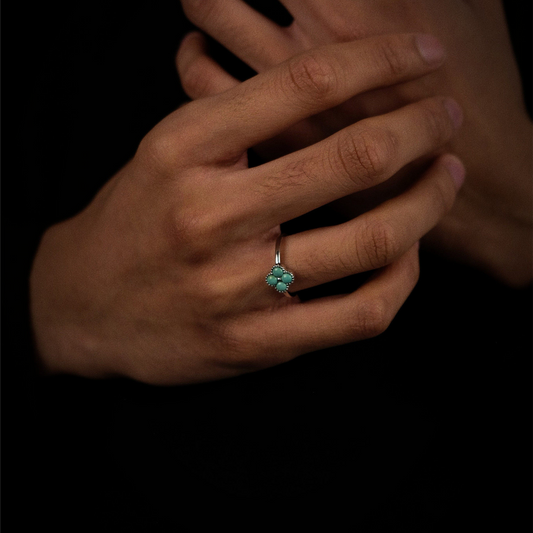
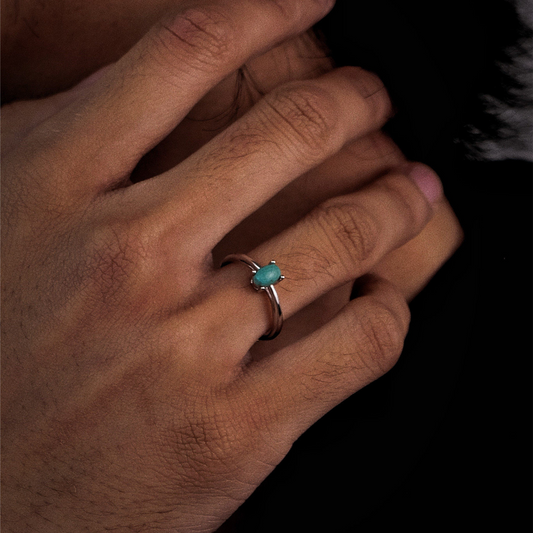
Look for dimensions or a wearing photo when scale matters. Rings, pendants, bracelets, and earrings all depend on how the piece sits, moves, and feels in daily use.
6. Check Seller Transparency
Good seller transparency is not about sounding perfect. It is about being specific.
The seller should be willing to explain what is known, what is unknown, what the photos show, and what the listing does not claim. If every answer becomes vague marketing language, slow down.
7. Check Return or Exchange Information
Before buying, confirm what happens if the piece is not as expected.
Return, exchange, or support policies do not prove authenticity, but they affect your buying risk. A clear policy gives you a practical path if scale, comfort, or product details are different from what you expected.
8. Ask One Clear Question
If one key detail is missing, do not ask five vague questions. Ask one specific question.
“Can you confirm whether the turquoise is natural, stabilized, dyed, reconstructed, or otherwise treated, and whether the metal is sterling silver or another material?”
A helpful answer tells you a lot about the seller.
Product Details Worth Comparing

Pure Drop Necklace
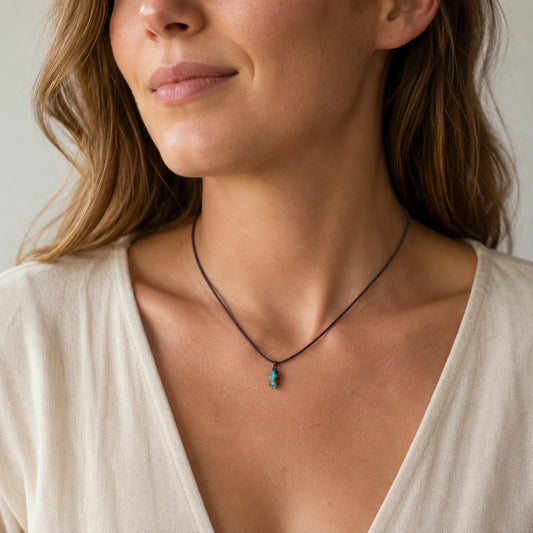
The Pure Drop Necklace is useful for checking a single focal stone, smooth silver bezel, chain detail, and wearing scale.

Horizon Ring
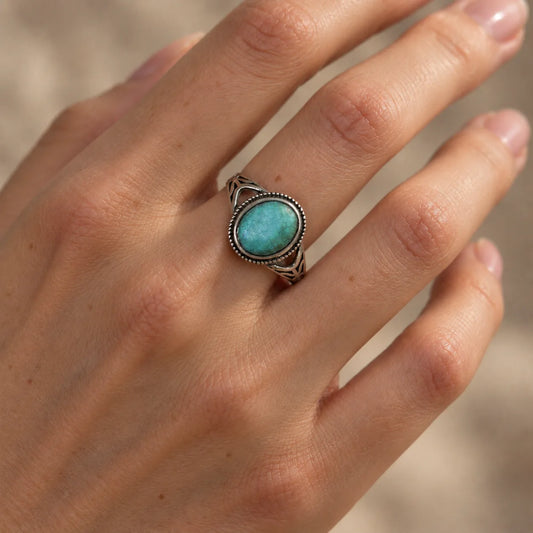
The Horizon Ring helps buyers compare a horizontal stone shape, polished silver signet structure, and how a ring appears on the hand.

Clarity Bracelet
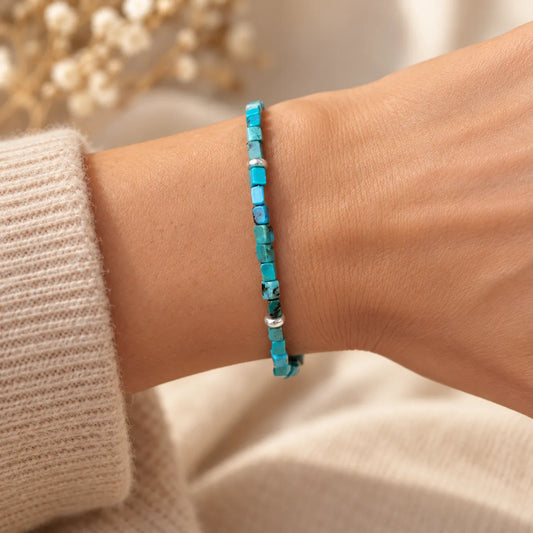
The Clarity Bracelet helps show repeated stone form, cube shapes, silver spacers, and wrist scale.

Axiom Hoops
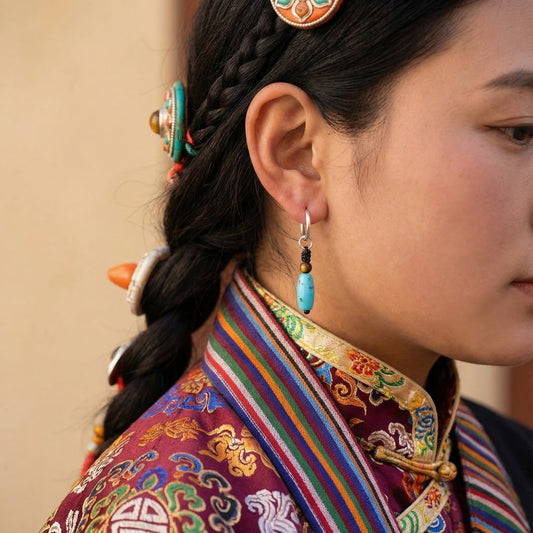
The Axiom Hoops help buyers inspect compact earring scale, square-cut stone form, and silver texture.
Use these examples as product-detail practice, not as automatic proof of treatment, origin, or authenticity.

Proceed, Ask, or Walk Away
Proceed when the material wording is clear, treatment disclosure is adequate, photos are useful, metal and construction details are visible, scale makes sense, and policies are easy to find.
Ask when the listing is mostly clear but one important detail is missing.
Walk away when the listing relies on vague “authentic” or “genuine” claims, hides material details, uses unclear photos, pressures you to buy quickly, or avoids direct material questions.
Ready to Compare Pieces?
Use the checklist while browsing. Look for clear product pages, close-up images, specific material wording, and enough scale context to choose calmly.
Compare Tibetan Turquoise JewelryFAQ
How do I buy authentic turquoise jewelry online?
Use a checklist that covers material wording, treatment disclosure, product photos, metal details, wearing scale, seller transparency, and return information.
Should I avoid stabilized turquoise?
Not automatically. Stabilized turquoise may still be real turquoise, but it should be disclosed so you know what you are buying.
What should I ask before buying turquoise jewelry?
Ask whether the turquoise is natural, stabilized, dyed, reconstructed, or otherwise treated, and whether the seller can provide close-up photos or material details.
Should I trust the word “genuine”?
Not by itself. “Genuine” is useful only when supported by specific material information.
Where should I shop after using the checklist?
Compare product pages where stone details, photos, metal structure, and wearing scale are visible enough to review calmly.