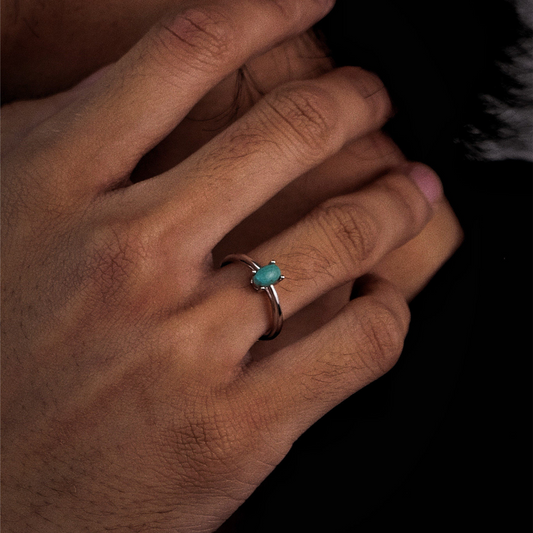
To tell whether turquoise is real, do not rely on color alone. Start by looking at the stone’s matrix, color variation, surface texture, weight, treatment information, and the seller’s product details. These clues can help you identify possible warning signs, but no single home test can confirm that a stone is natural, untreated, or from a specific mine.
A safer approach is to compare several details at the same time. Look at the stone, read the material disclosure, check the product photographs, and consider whether the price and seller information make sense together.
How to judge turquoise before buying
- Look for natural variation. Matrix, color shifts, mineral marks, and surface character can provide useful clues.
- Use several clues together. Color, touch, weight, and water response cannot prove authenticity on their own.
- Check treatment disclosure. Natural, stabilized, dyed, reconstructed, and imitation materials are different categories.
- Review the seller’s information. Close-up photos, dimensions, materials, care instructions, and realistic descriptions matter.
- Use professional testing when certainty matters. High-value, inherited, antique, or resale pieces may require laboratory evaluation.
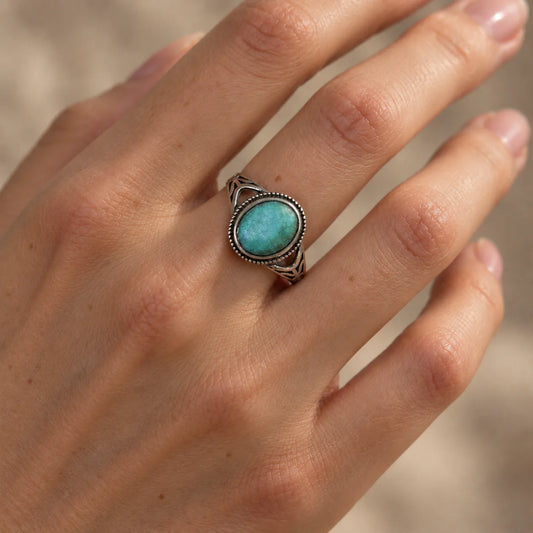
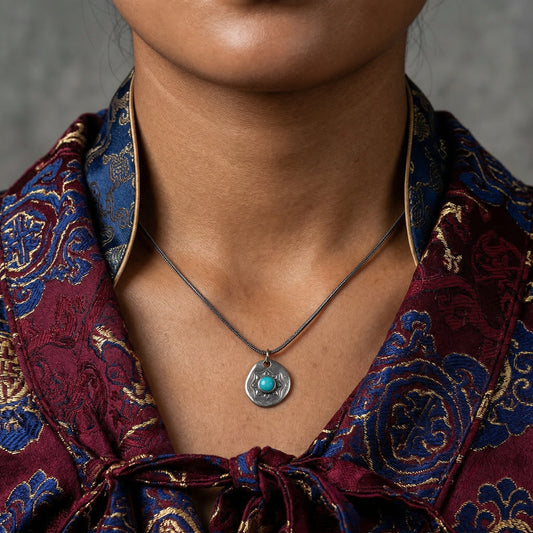
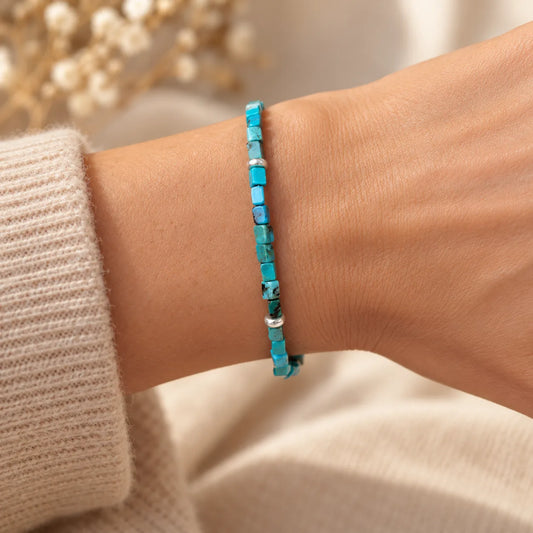
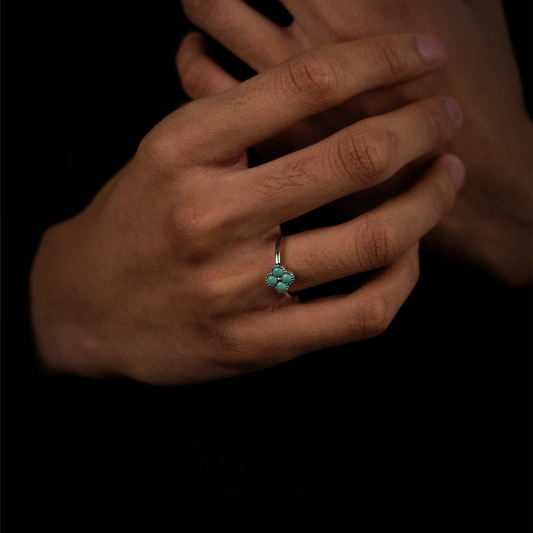
Want to see how stone details are presented in real jewelry? Browse TaShi Tibetan turquoise jewelry with close-up stone photos .
What Does “Real Turquoise” Mean?
The phrase “real turquoise” can describe several different questions. A buyer may want to know whether the material is actually turquoise, whether it is natural or reconstructed, whether it has been stabilized or dyed, or whether the seller’s origin claim is supported by evidence.
These questions should not be treated as the same thing.
Stabilized turquoise can still be real turquoise. “Treated” does not automatically mean “fake,” but the treatment should be disclosed clearly when relevant to the buying decision.
Why Uniform Color Can Be a Warning Sign
Turquoise can naturally vary in color, texture, and matrix. A completely uniform appearance is not automatically proof of imitation, but a very bright, flat, and perfectly consistent appearance deserves closer inspection, especially when the listing provides little material information.
Some imitation materials are made from dyed howlite, plastic, glass, or reconstructed stone. These materials can look attractive in photographs, but the color, surface, and internal structure may not resemble natural turquoise.
For a focused comparison, read our guide to dyed howlite vs turquoise .
Eight Practical Checks Before Buying
The following checks can help you screen a turquoise listing. They are not equivalent to professional identification, and some are only useful as supporting clues.

1. Look at Color and Matrix Variation
Turquoise may show gradients, mottled areas, dark veins, host-rock marks, or shifts between blue, green, brown, and black tones.
Matrix can be useful visual information, but it is not a guarantee of authenticity. Some imitation materials can be patterned to resemble matrix, while some natural turquoise has little or no visible matrix.

2. Treat Water Response as a Limited Clue
Some porous, untreated turquoise may temporarily deepen in color when it comes into brief contact with water. Stabilized, sealed, or resin-treated material may react less.
This observation cannot confirm that a stone is real. It also cannot reliably identify every treatment.
Do not soak finished jewelry. Water may affect silver, cord, adhesives, and delicate settings.
3. Compare Weight and Surface Feel Carefully
Stone often feels different from lightweight plastic, but weight depends on the size of the piece, the setting, and any additional materials used.
A smooth surface does not automatically mean imitation. Polishing, stabilization, and other treatments can change how turquoise feels.
Weight and touch are supporting clues only. They cannot confirm the material by themselves.
7. Avoid Destructive Testing
Scratching, cutting, heating, smashing, or applying chemicals can damage genuine turquoise as well as imitation material.
A destructive result would not necessarily tell you whether the stone was natural, stabilized, dyed, or reconstructed.
Do not damage jewelry to test it. Use product information and professional testing when needed.What Each Check Can and Cannot Prove
The safest way to use these checks is to understand their limits.
| Check | What It May Help You Notice | What It Cannot Prove |
|---|---|---|
| Color and matrix | Unusual uniformity, painted-looking patterns, or natural-looking variation. | It cannot confirm that the stone is natural or untreated. |
| Water response | Possible porosity or a temporary change in appearance. | It cannot identify every treatment and should not be used on finished jewelry. |
| Weight and touch | Whether the piece feels unusually light, warm, or plastic-like. | It cannot distinguish every type of turquoise treatment or imitation material. |
| Price | Whether the listing appears inconsistent with its material and product claims. | A low price does not automatically mean fake, and a high price does not prove authenticity. |
| Seller disclosure | Whether the seller provides useful information about materials, treatments, dimensions, and care. | Seller claims still need to be supported by accurate product information and evidence. |
| Laboratory testing | Professional evaluation of composition and certain treatments. | Testing may still have limits, and origin determination can require separate analysis. |
Natural, Stabilized, Dyed, and Imitation Turquoise
Before buying, ask what category the material belongs to rather than using only the word “real.”
| Material Category | What It Means | What to Check |
|---|---|---|
| Natural turquoise | Turquoise that formed naturally. It may have visible matrix or a relatively clean appearance. | Look for accurate photos, clear material information, and realistic descriptions. |
| Stabilized turquoise | Real turquoise that has been treated to improve stability or durability. | Check whether stabilization is disclosed and whether special care is required. |
| Dyed or reconstructed material | Material that has been colored, bonded, pressed, or otherwise modified to create a turquoise appearance. | Look for clear disclosure of dyeing, reconstruction, filling, or other treatments. |
| Imitation material | Another material, such as plastic, glass, or dyed howlite, made to resemble turquoise. | Check the product description and avoid relying on color alone. |
When Professional Testing Is Needed
Home observations may be enough for screening an inexpensive purchase, but they are not enough when the financial or personal value of the piece is high.
Consider professional testing when the turquoise is:
- high-value
- antique or inherited
- being purchased for resale
- marketed with a significant origin claim
- described as rare or untreated without supporting information
- important for an insurance or estate valuation
A qualified laboratory may be able to evaluate the material and identify certain treatments. However, laboratory testing and origin determination are not always the same service.
If certainty matters, ask the laboratory what the report will cover before submitting the stone.
How to Buy Turquoise More Carefully
When buying turquoise online, review the listing as a complete set of information rather than focusing on one photograph or one test.
- Look for close-up photos of the actual piece.
- Check whether the stone shows natural variation.
- Read the material and treatment information.
- Review the metal, dimensions, and construction details.
- Compare the product description with the photographs.
- Check whether care instructions match the material.
- Ask questions before buying if the treatment status is unclear.
- For high-value pieces, consider independent professional testing.
For a broader purchase process, read our authentic turquoise jewelry buying guide .
How TaShi Shows Turquoise Materials
TaShi uses close-up product photography and material descriptions to help buyers review the stone, setting, scale, and visible variation before purchasing.
Explore Tibetan Turquoise Jewelry
Browse TaShi’s Tibetan turquoise jewelry collection to compare stone variation, close-up details, silver settings, and different everyday jewelry designs.
Frequently Asked Questions
Can you tell if turquoise is real by color alone?
No. Color can provide a clue, but natural turquoise varies widely and some imitation materials are dyed to look convincing. Compare color with matrix, surface, material information, and seller transparency.
Can stabilized turquoise still be real turquoise?
Yes. Stabilized turquoise can be real turquoise that has been treated to improve stability or durability. Stabilization and imitation are not the same category, so the treatment should be disclosed clearly.
Can real turquoise have little or no matrix?
Yes. Some natural turquoise has very little visible matrix. The absence of matrix does not automatically mean the material is fake, just as visible matrix does not prove authenticity by itself.
Should I scratch or heat turquoise to test it?
No. Scratching, heating, applying chemicals, or breaking the piece can damage genuine turquoise and still may not identify the material accurately. Use non-destructive observation and professional testing when needed.
When should turquoise be professionally tested?
Professional testing is worth considering for high-value, antique, inherited, resale, or strongly advertised origin pieces. Ask the laboratory what material and treatment questions the report will answer.
Sources and Review Information
Written by: TaShi Turquoise Editorial Team
Reviewed for: Material-disclosure clarity, buyer guidance, and the distinction between home observation and professional testing.
Last updated: September 28, 2026
Sources
- GIA: Turquoise
- GIA: An Introduction to Gem Treatments
- GIA: Technical Evolution and Identification of Resin-Filled Turquoise
- FTC: Advertising Diamond, Gemstones, and Pearls
Home observations can help identify possible warning signs, but they cannot confirm natural origin, complete treatment status, or mine origin. Professional testing may be necessary when certainty matters.