Searching for a turquoise scratch test usually begins with a reasonable question: can one quick test separate turquoise from dyed howlite or another imitation? The difficulty is that scratching a finished piece can create permanent damage while still failing to give a complete answer.
A scratch result is only one limited observation. It does not establish a stone's full identity, treatment history, or quality, and it should never be treated as a stand-alone verdict.
- A scratch test can damage a stone, polish, coating, or finished setting.
- Hardness overlap and test conditions make a single result inconclusive.
- Dyed howlite can resemble turquoise, but color or veining alone is not proof.
- Non-destructive observation and clear material information are safer first steps.
What a Turquoise Scratch Test Can and Cannot Tell You
A scratch test is meant to compare relative surface resistance. In controlled mineral testing, that can contribute one piece of information. On finished jewelry, however, the result may be affected by polish, surface coating, stabilization, the pressure used, the tool, or the location tested.
That means a mark, powder, or lack of a visible scratch cannot confirm by itself that a stone is turquoise or that it is untreated. At most, an unexpected result may tell you to pause and seek better information.
Why Scratch Testing Can Damage Jewelry

Turquoise jewelry may have polished surfaces, exposed edges, silver settings, or small areas where a mark remains visible. Scratching can remove polish, chip an edge, disturb a surface treatment, or reduce the condition of the finished piece.
Practical boundary: do not perform a destructive test on jewelry you own, may return, or are considering buying.Dyed Howlite vs Turquoise: Why the Confusion Happens

Howlite is a different mineral that may be dyed blue and sold in ways that visually resemble turquoise. Both materials can show dark lines or surface variation, especially in edited or distant photographs.
Those similarities explain the confusion, but they do not create a reliable visual rule. A photograph can raise a question; it cannot replace accurate material identification.
| Observation | What it may suggest | What it cannot prove |
|---|---|---|
| A surface mark appears | The tested area reacted to the tool or pressure | The stone's complete identity or treatment status |
| Blue color transfers | Dye or another surface material may be present | Which base mineral is underneath |
| No obvious change | The tested spot resisted that specific method | That the material is turquoise |
Why One Test Is Not Enough

Tests that look for dye transfer may reveal that something deserves further investigation, but a single result does not identify every possible base material or explain every treatment.
Likewise, a negative result does not prove that a piece is turquoise. Coatings, test location, prior cleaning, and the tested surface can all affect what happens.
Safer Ways to Observe Before Testing
Before considering any physical test, collect non-destructive information. Look at clear close-ups under neutral light, compare more than one angle, read the material description carefully, and note whether treatment information is stated when relevant.
These observations do not independently authenticate a stone. They help you identify missing information without risking damage. For a broader set of practical authenticity checks, read How to Tell If Turquoise Is Real: 8 Practical Checks Before Buying.
If a piece is valuable, sentimental, vintage, or already set in finished jewelry, stop before using a scratch, heat, solvent, or needle method. A qualified gemologist or jeweler can decide whether professional testing is appropriate without turning uncertainty into avoidable damage.
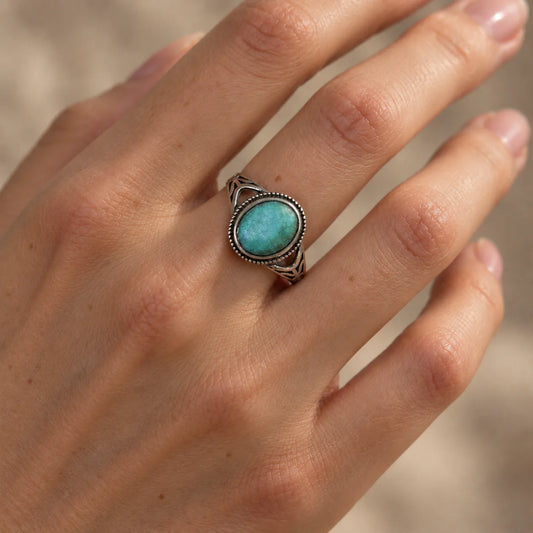
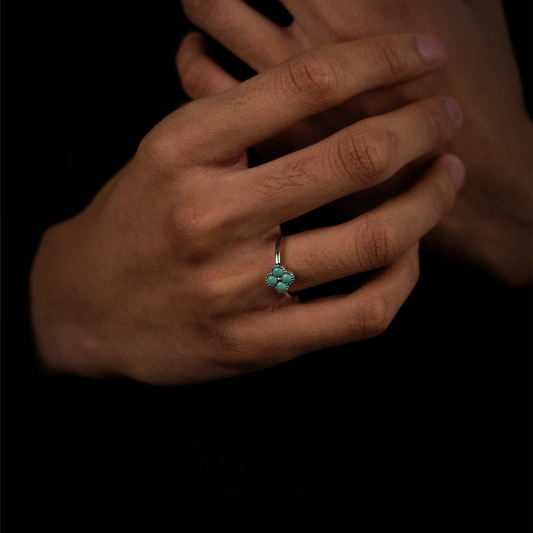
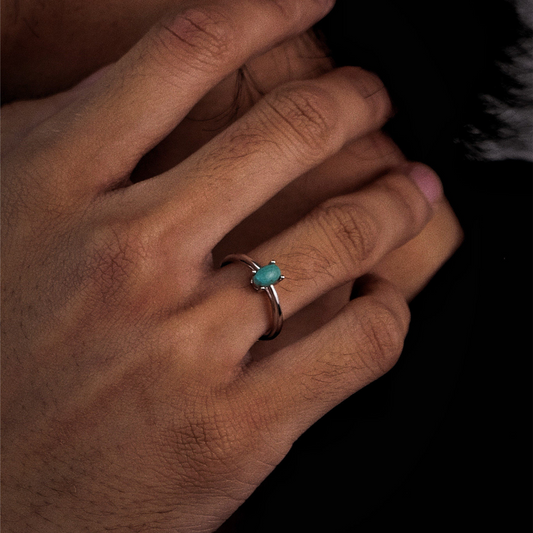
On a finished piece, close product photography can show the stone surface, visible setting, and wearing scale. Those details help you understand what is offered, but they do not serve as a substitute for material identification.
The elongated turquoise form and polished silver signet setting can be examined through the product image without putting the finished piece through a destructive test.

Frequently Asked Questions
Can a scratch test prove turquoise is real?
No. A scratch result may add one limited observation, but it cannot establish full material identity or treatment status on its own.
Can a turquoise scratch test damage jewelry?
Yes. It can mark the polish, chip an edge, affect a surface layer, or leave visible damage on a finished piece.
Is dyed howlite the same material as turquoise?
No. Howlite is a different mineral. When dyed blue, it may resemble turquoise in some photographs or listings.
Does blue color transfer prove a stone is dyed howlite?
No. Color transfer is a warning sign that dye or another surface material may be present, but it does not identify the base mineral by itself.
What is the safest next step when a stone is uncertain?
Avoid destructive home testing. Gather clear documentation and, for valuable or sentimental jewelry, consult a qualified gemologist or jeweler.
Continue Reading
Use clear product photographs and material information to understand each piece before deciding whether it fits what you are looking for.
Each product page should be read for its own material, size, care, and construction information. The links below are shopping paths, not independent proof of stone identity.
This guide uses gemological and consumer-disclosure principles to explain why a scratch test is limited. A visual comparison or home observation cannot independently certify a stone’s identity, treatment status, or geographic origin.