Turquoise jewelry is easiest to style when the outfit gives it a clear place to sit. Start with the neckline, sleeve or hand where you want the color to appear, then choose a piece that fits the clothes you already wear. You do not need a matching set; one well-placed ring, pendant, bracelet or pair of earrings is often enough.
Four useful styling decisions
- Use a necklace with open or simple necklines; choose earrings when the collar is already busy.
- Pair turquoise with cream, denim, navy, black or earth tones according to the contrast you want.
- Let the jewelry size match the clothing: plain clothes allow more presence, while prints need less competition.
- Choose combinations you can repeat in real life, not only outfits that look good in a styled photograph.
Start With the Outfit, Not the Jewelry
Before choosing a piece, look at the clothing details already in the frame. A plain shirt leaves room for a pendant. A patterned blouse may look better with earrings or a ring. A rolled cuff creates a visible place for a bracelet, while a wide sleeve may hide it.
Choose Jewelry by Neckline
The neckline changes the amount of open space around a necklace. It is one of the quickest ways to decide whether the jewelry should sit at the neck or move to another part of the outfit.
Open neckline
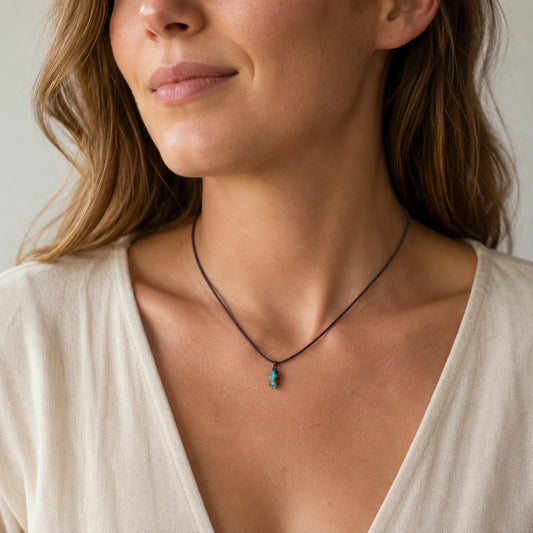
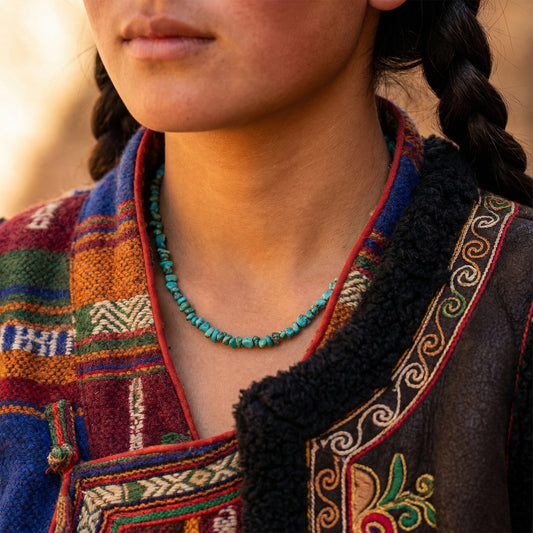
An open V-neck, scoop neck or square neck leaves room for a shorter pendant or a necklace that follows the line of the clothing. Keep the chain and pendant within that open area instead of letting it fall across a busy edge.
Crew neck or high neckline
A crew neck can work with a longer pendant that falls below the fabric line. If the knit or collar is thick, earrings or a ring may give a cleaner result than placing another shape directly on top of it.
Collars, scarves and layered necklines
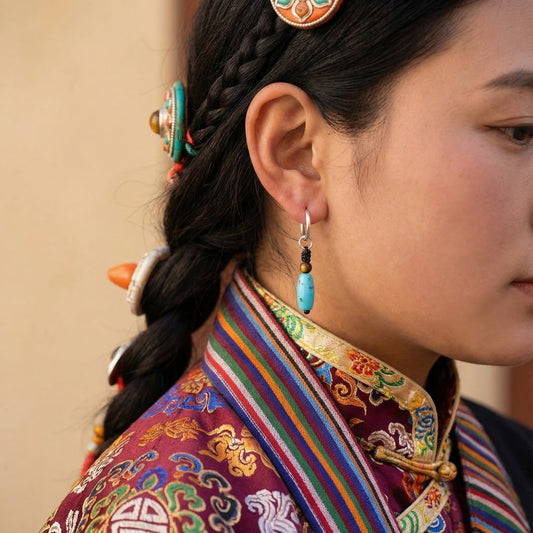
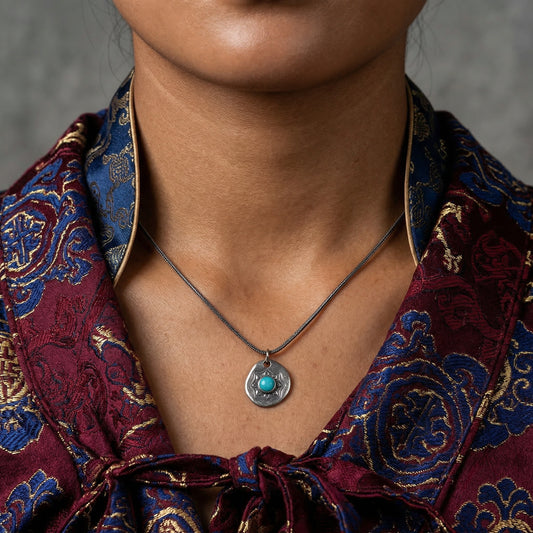
Collars and scarves already create strong lines. Use a small pendant only if there is clear space, or move the turquoise to the ears, hands or wrist. A navy blazer, white shirt and turquoise earrings is often easier to wear than a necklace competing with the shirt collar.
What Colors Go With Turquoise Jewelry?
Turquoise can either stand out sharply or sit quietly within an outfit. The clothing does not need to match the stone exactly. It only needs to give the blue-green color enough contrast or enough space to look intentional.

Choose the level of contrast
Black and white: create the clearest contrast. Try a black slip dress with one turquoise cuff and no necklace, or a white shirt with a turquoise pendant.
Cream and grey: make the color feel softer. A cream knit and turquoise ring works for everyday wear; pale grey suits lighter blue-green stones.
Denim, navy and earth tones: create a relaxed setting. Try a denim shirt with a pendant, or a navy blazer with a simple turquoise ring.
Bright colors and prints
With a patterned dress, let turquoise echo one quiet color in the print or use it as a small contrast. If the clothing already has several strong colors, choose one smaller piece rather than adding a necklace, earrings and bracelet together.
Use Turquoise Color and Matrix as Part of the Styling
Turquoise is not one fixed shade. A stone may look pale blue, blue-green, deeper green or mixed, and matrix may add brown, grey or dark lines to the surface. These differences affect which clothing background feels natural.
Lighter stones often stand out against denim, charcoal or cream. Deeper blue-green stones can sit comfortably with white, tan, navy and warm brown. A piece with visible matrix already has surface detail, so it can look strongest beside plain fabric rather than another busy print.
You do not need to match the matrix exactly. Instead, repeat its general mood: pair a softly marked stone with washed denim or woven cotton, or place a higher-contrast stone against a clean black or white outfit.
How to Style Turquoise by Form

Use the part of the outfit that has room
Necklaces: An open neckline suits a shorter necklace or pendant. With a crew neck, collar or scarf, use a longer pendant or move the color to the ears or hands.
Earrings: Drop earrings add movement near the face. Smaller earrings work better when the necklace already has a visible pendant.
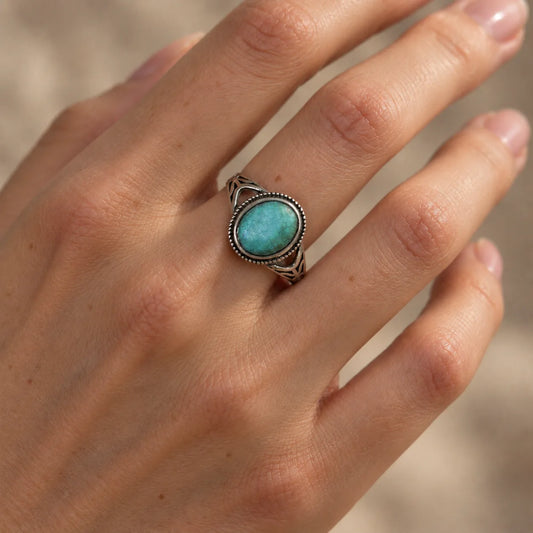
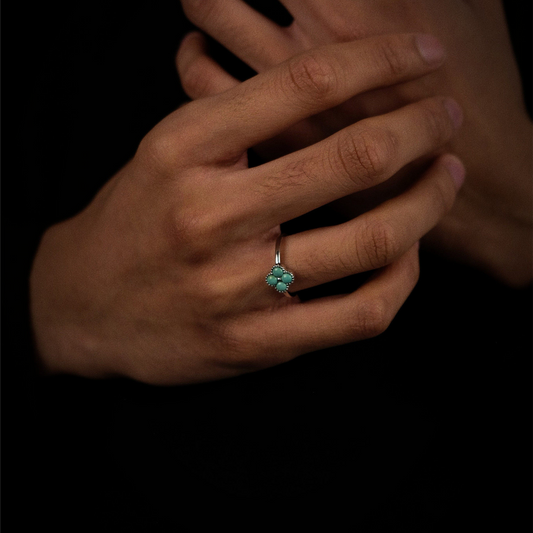
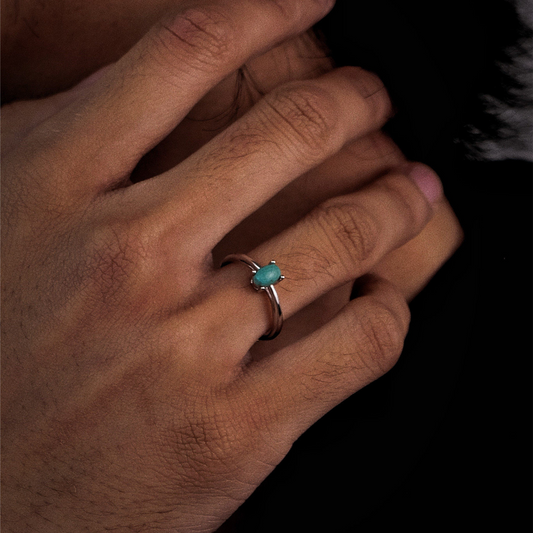
Rings: A turquoise ring adds interest to a plain sleeve and works well when the upper part of the outfit is already detailed.
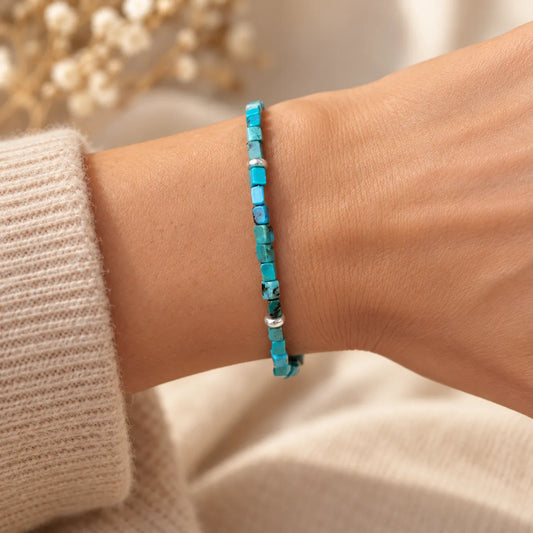
Bracelets: Short sleeves and rolled cuffs show the piece clearly. Wide or long sleeves may call for a ring or earrings instead.
For different jewelry shapes and materials, read the guide to choosing Tibetan turquoise jewelry. You can also compare turquoise earrings and drops, turquoise rings and bands, and turquoise bracelets and cuffs.
Mix Turquoise With Silver Jewelry
Turquoise does not need to be surrounded by matching turquoise pieces. Sterling silver or other quiet metal-toned jewelry can keep the outfit connected without adding another strong color.
Try a turquoise pendant with small silver studs, or a turquoise ring beside one or two slim silver bands. With a bracelet, leave enough space between it and a watch or cuff so the stone remains easy to see. If the turquoise has a detailed setting, use simpler metal pieces nearby. If the design is minimal, one textured silver accessory can add interest without making the combination look busy.
Four Outfit Formulas to Reuse
These combinations can be adjusted for your wardrobe. The useful part is the relationship between the clothing and the jewelry: simple clothes give the stone more space, while detailed clothes need a smaller or more distant accent.
For daytime
Use a ring, bracelet or small earrings with denim, cotton, linen or knitwear. These materials already have a relaxed texture, so turquoise does not need an elaborate setting to make the outfit feel finished.
For work
Choose one piece that remains visible when you move through the day. Earrings work with a structured jacket, while a ring works with a plain sleeve. Avoid placing a large pendant directly over a high collar or statement button line.
For evening
Evening clothing can support a more visible turquoise piece when the dress or top is restrained. A larger pendant suits a clean neckline; if the dress already has an architectural shoulder or neckline, use a ring or earrings instead.
How to Keep Turquoise Jewelry Looking Modern
Modern styling usually comes from removing one accessory rather than adding another. If the necklace is doing the work, use small earrings. If the bracelet is visible against a rolled cuff, leave the wrist uncluttered.

Repeat texture, not every color
A textured knit can sit naturally beside a stone with visible surface variation. A clean neckline can support a stronger pendant. You do not need every accessory to match; a similar level of simplicity is usually enough.
Common Styling Mistakes
FAQ: Wearing Turquoise Jewelry
Can turquoise jewelry be worn every day?
Yes. A small ring, bracelet or pair of earrings is often easier to repeat than a large statement piece. Follow the care information for the specific jewelry.
Does turquoise jewelry work with a black dress?
Yes. Try one turquoise cuff, pendant or ring. Using one main piece keeps the black-and-turquoise contrast clear.
Can turquoise jewelry be mixed with other silver jewelry?
Yes. Match the general level of simplicity rather than forcing every piece to have the same size or design.
Should you wear one turquoise piece or several?
Either can work. Start with one piece, then add a smaller supporting accessory only if the outfit still feels balanced.
Find Your Everyday Turquoise Piece
Compare necklaces, earrings, rings and bracelets across different shapes, colors and surface variations. Choose the form that fits the clothes and occasions you actually wear.