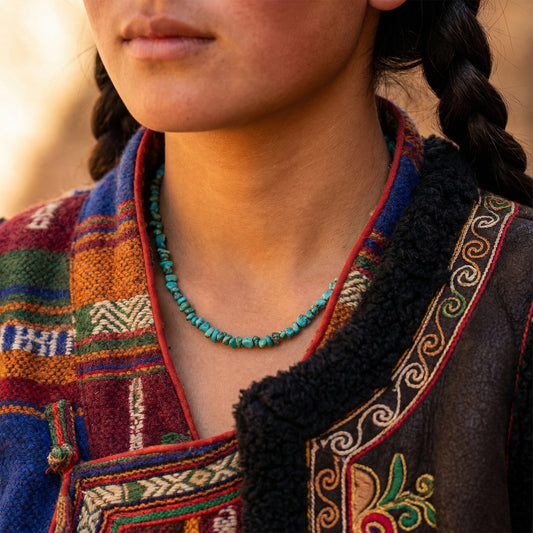
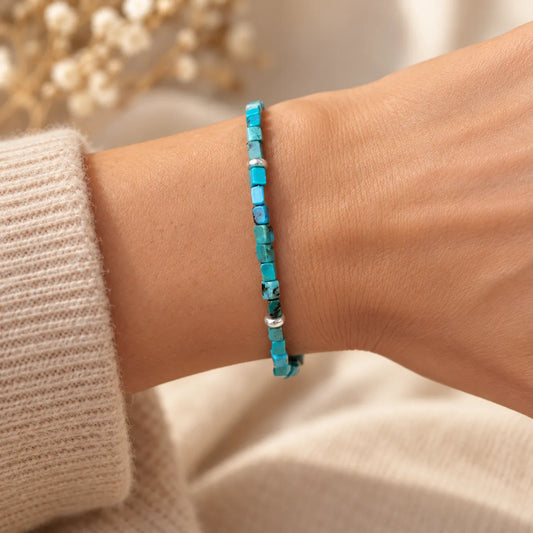
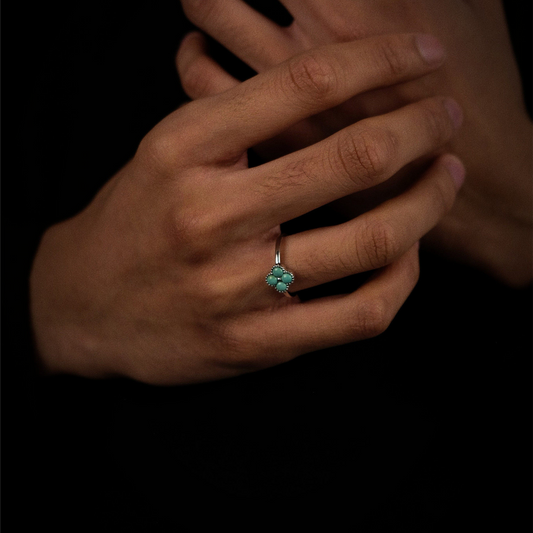
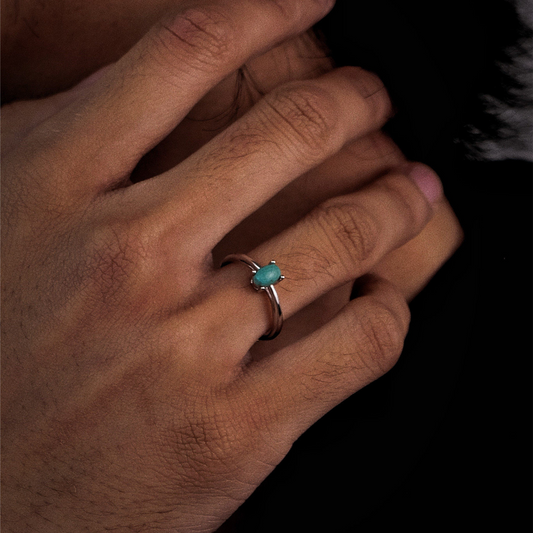
Tibetan turquoise jewelry brings turquoise into forms that are made to be worn: necklaces, bracelets, rings, and earrings. The stone is often the starting point, but the final character of a piece also comes from its setting, metalwork, proportions, and the way it sits on the body.
Turquoise is not completely uniform from one stone to another. Color, matrix, surface texture, shape, and visual depth can all vary. Some people are drawn to that variation because it gives a piece a more individual appearance.
Choosing a piece is therefore about more than finding a color you like. It is also about choosing the right jewelry type, understanding the materials, and finding a design that fits the way you actually dress and wear jewelry.
Quick Summary
- Choose the jewelry type according to where and how you want to wear turquoise.
- Look at the stone’s color, shape, surface, matrix, and natural variation.
- Check the metal, other materials, dimensions, and available treatment information.
- Consider comfort, visual weight, and how the piece works with your existing wardrobe.
What Does Tibetan Turquoise Jewelry Mean?
The phrase “Tibetan turquoise jewelry” can refer to jewelry influenced by Tibetan design, ornament, or craft traditions. It may also describe a contemporary piece designed around that visual language.
The name alone does not prove where the turquoise was mined, whether the stone is untreated, or where the jewelry was made. Those details should be explained separately through the product’s material information, treatment disclosure, and maker or brand information.
What Makes Tibetan Turquoise Jewelry Distinct?
The appeal of turquoise jewelry usually comes from the balance between the stone and the design around it. A piece can feel quiet or expressive depending on the size of the stone, the amount of metal, and the way the jewelry moves when worn.
Natural Stone Variation
Turquoise may show different shades of blue or green, darker markings, uneven color, surface texture, and irregular outlines. These details are part of the appearance of the material, but they should not be treated as automatic proof of authenticity or higher value.
Good product photography should make the stone easier to inspect rather than hiding all variation behind heavy editing or distant images.
Design and Craftsmanship
The same type of turquoise can feel completely different when used in a pendant, a bracelet, a ring, or a pair of earrings.
Pay attention to how the stone is held, how the metal is finished, how the proportions work together, and whether the design feels suitable for its intended use.
Material Information
Before purchasing, check the main materials listed for the specific piece. Depending on the design, this may include turquoise, sterling silver, other stones, beads, cord, clasps, or decorative metal components.
Turquoise may also be stabilized or otherwise treated to improve durability. Treatment does not automatically mean that a stone is imitation, but it should be disclosed clearly when known.
Common Types of Tibetan Turquoise Jewelry
Each jewelry type places turquoise in a different part of your daily wardrobe. The most suitable choice depends on how visible you want the stone to be and how much movement or weight feels comfortable.
How to Choose Tibetan Turquoise Jewelry
Start with how you expect to wear the piece. A necklace for daily layering, a bracelet for frequent movement, and a ring for hand wear each need to be judged a little differently.

Match the Piece to Your Routine
Think about your usual clothing, work environment, daily movement, and whether you normally wear one noticeable piece or several smaller accessories.
- For quiet daily styling: choose smaller stones, simpler settings, or softer color combinations.
- For layering: check whether the piece sits comfortably beside your other jewelry.
- For a stronger focal point: look for a larger stone, stronger contrast, or a more distinctive outline.
- For frequent movement: pay attention to weight, fastening, setting security, and overall comfort.
Look Closely at the Stone
Do not judge turquoise only by its main color. Look at the shape, surface, visible markings, polish, and how much variation appears in the photographs.
Close-up images are particularly useful when the stone’s irregularity is part of the reason you are interested in the piece. If all the images are distant or heavily edited, it becomes harder to understand what you will actually receive.
Check the Materials
The product description should identify the main stone and metal materials. If the design includes other stones, beads, cord, or metal accents, those details should not be left unclear.
Also check the dimensions. A product photograph can make a piece look larger or smaller than it feels in person, especially when there is no image showing scale on the body.
Consider Comfort and Proportion
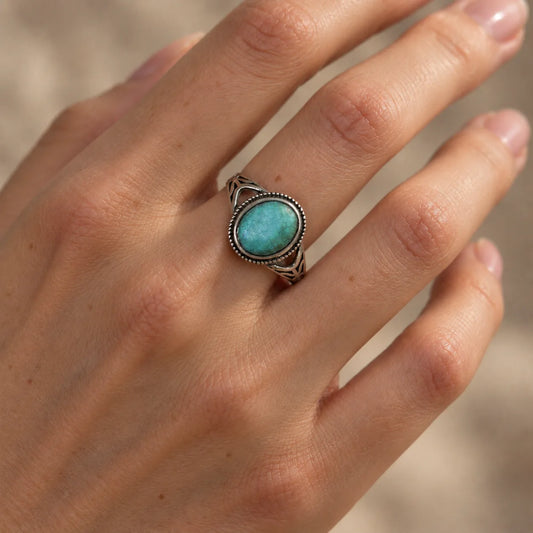
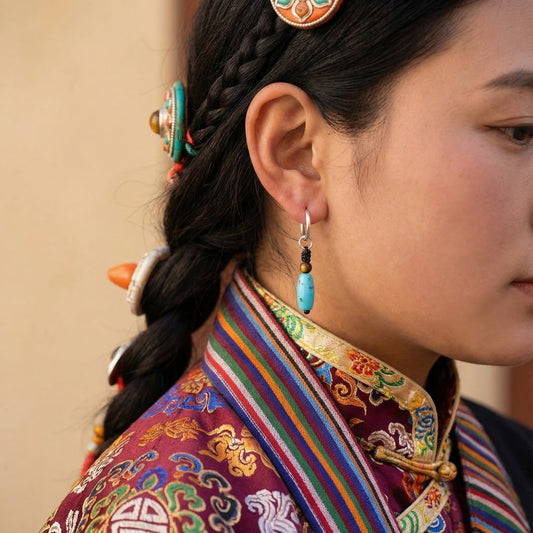
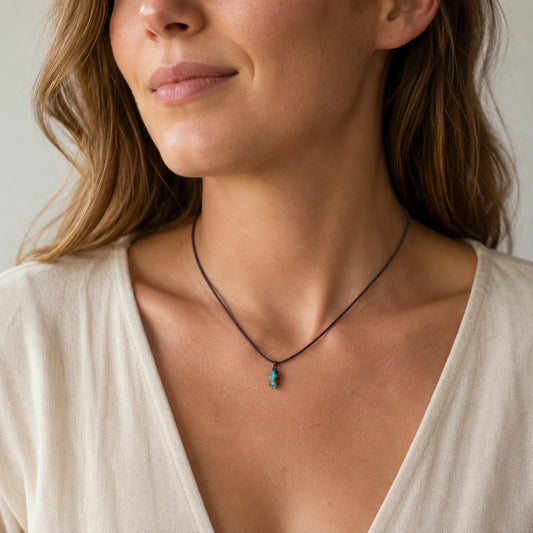
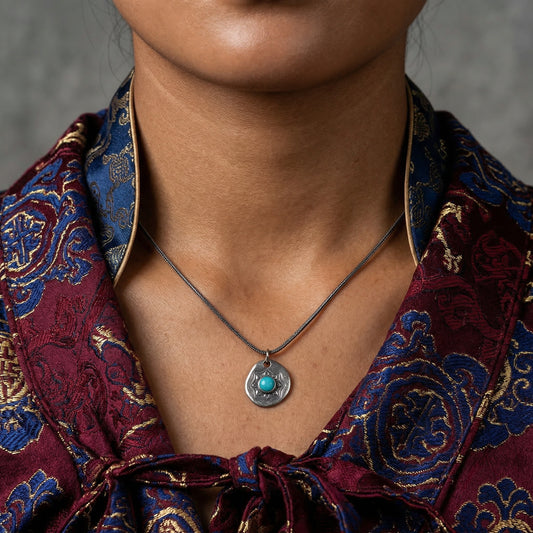
Jewelry should suit the part of the body where it is worn. For bracelets, check wrist size and available length. For rings, look at finger proportion and setting height. For necklaces and earrings, consider chain length, drop length, and total weight.
A design that looks attractive in a still image may feel different after several hours of wear. Images showing the piece on the body are useful because they give a clearer idea of scale and movement.
Review Care Information
Turquoise should generally be protected from prolonged water exposure, perfume, cosmetics, harsh cleaners, excessive heat, and hard impacts.
After wearing, gently wipe the piece with a soft, dry cloth. Store it separately from harder jewelry to reduce scratches and unnecessary contact.
Tibetan Turquoise Jewelry for Everyday Wear
Tibetan turquoise jewelry can work with casual clothing, workwear, and more considered outfits. The most practical piece is usually the one that fits your routine rather than the one with the most dramatic appearance.
Bracelets and smaller rings can be easy to include in daily outfits. Necklaces can become the main styling element, while earrings can add color and movement without requiring several layers of jewelry.
Turquoise may also look slightly different under indoor light, sunlight, studio light, or different screens. Clear photographs and realistic material information help set better expectations before purchase.
Questions to Ask Before Buying
- Is the stone material clearly identified?
- Are treatment details explained when relevant?
- Can you see the stone surface and natural variation?
- Are the metal, other materials, and dimensions provided?
- Does the piece fit your usual way of dressing and wearing jewelry?
- Are care instructions easy to find?
Frequently Asked Questions
Does Tibetan turquoise jewelry always mean the stone came from Tibet?
No. The term may refer to cultural influence, design context, or a style associated with Tibetan jewelry. It should not be treated as automatic proof of mining origin. Review the specific material and origin information provided by the seller.
Can Tibetan turquoise jewelry have natural variation?
Yes. Turquoise can vary in color, shape, texture, matrix, and surface appearance. These differences should be shown honestly in the product photographs and explained in the product description.
Which type of Tibetan turquoise jewelry is best for everyday wear?
It depends on your routine. Smaller rings, balanced bracelets, simple necklaces, and lightweight earrings may be easier to wear regularly, while larger pieces can work better as statement jewelry.
Explore Tibetan Turquoise Jewelry
Compare necklaces, bracelets, rings, and earrings with visible turquoise variation, clear material information, and designs created for everyday wear.