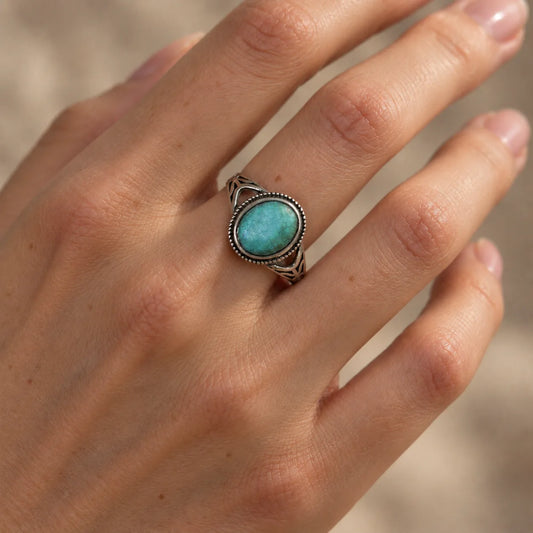
Tibetan turquoise rings bring the color and irregular character of turquoise into a piece of jewelry that is closely connected to the hand. The stone may be the main feature, but the ring band, setting height, and overall weight determine how the piece feels in daily use.
Some rings are quiet and easy to wear with other jewelry. Others use a larger stone, an openwork band, or several stones to create a stronger focal point.
The right choice depends on more than whether you like the color. You also need to look at the stone’s shape, how it is held, the available size, and whether the design fits the way you normally use your hands.
Quick Summary
- Look at the stone shape, color, texture, and visible matrix.
- Check the setting, band width, and height above the finger.
- Confirm the ring size and consider comfort during hand movement.
- Review the metal, treatment information, and care instructions.
- Choose a simple, statement, signet, or openwork style based on how you will wear it.
What Makes a Tibetan Turquoise Ring Distinct?
A turquoise ring is a combination of three things: the stone, the setting, and the band. Changing any one of them can make the ring look and feel completely different.
The term “Tibetan” may refer to cultural influence or a Tibetan-inspired design context. It should not be treated by itself as proof of the stone’s mining origin, treatment status, or place of manufacture. Those details should be explained separately on the product page.
The Stone
Turquoise can vary from one piece to another. You may see differences in:
- blue, green, or mixed color tones
- oval, round, irregular, or elongated shapes
- surface texture and polish
- matrix and darker markings
- overall size and visual weight
A larger stone will usually draw more attention to the hand. A smaller stone can feel easier to combine with other rings. Neither is automatically better; the decision depends on the look you want.
The Setting
The setting holds the turquoise in place and controls how much of the stone can be seen. A high setting creates more presence, while a lower profile may be easier to wear during work and other daily activities.
Look closely at the side view as well as the front view. A ring that looks good from above may feel different if the stone sits high or the band is wider than expected.
The Band
The band changes the balance of the ring. A slim band can make the stone look more prominent, while a broad or textured band can give the whole design a heavier, more architectural appearance.
Openwork bands may create a lighter visual effect, but they can also have more edges and details to consider when wearing the ring next to other pieces.
Common Tibetan Turquoise Ring Styles
The main difference between ring styles is not only the size of the stone. It is also how much attention the ring takes on the hand and how easily it fits into everyday clothing.
| Style | Appearance | Best Question to Ask |
|---|---|---|
| Statement Ring | A larger stone or stronger silhouette that becomes the main focus. | Will the size and height remain comfortable during daily use? |
| Simple Turquoise Ring | A quieter design that is easier to combine with different outfits. | Does the shape work with the rings I already wear? |
| Silver Turquoise Ring | Turquoise paired with visible silver structure or finishing. | How do the metal tone and band shape change the look of the stone? |
| Openwork or Multi-Stone Ring | Uses cut-out metalwork or several stones for a more detailed design. | Will the extra structure feel comfortable beside other rings? |
Statement Turquoise Ring
A statement ring uses scale to attract attention. The stone may be larger, the band may be wider, or the setting may extend further across the finger.
This style works best when you want the ring to carry an outfit on its own. Before choosing one, check the side profile, total weight, and whether the design catches on clothing.
Simple Turquoise Ring
A simple ring places less emphasis on the surrounding metal and more on the stone itself. It is often easier to wear with casual clothing or combine with slim bands.
If you want one ring that can move between different outfits, a restrained setting is usually easier to style than a highly detailed design.
Silver Turquoise Ring
Silver can frame the turquoise, create contrast, or become part of the visual design. Smooth silver gives a cleaner appearance, while oxidized, textured, or openwork details create more depth.
Check the product description for the stated metal material rather than assuming that every silver-colored ring has the same composition.

How to Choose a Tibetan Turquoise Ring
Start with the way you expect to wear the ring. A ring for occasional styling can be larger and more expressive. A ring for daily use needs to work with hand movement, clothing, and the other jewelry you already wear.
- For a quiet look: choose a smaller stone or simpler band.
- For a stronger focal point: choose a larger stone or more structured setting.
- For stacking: check the band width and the space around the stone.
- For frequent hand movement: avoid a setting that feels too high or catches easily.
1. Look at the Stone From More Than One Angle
The front image shows the main shape, but the side and close-up images often tell you more about the ring.
Check the stone’s outline, surface, visible markings, polish, and relationship to the silver. If the product only has a distant image, it may be difficult to understand the actual scale and texture.
2. Check the Setting and Materials
A clear product description should identify the turquoise, metal components, setting structure, band details, and available sizes.
If the turquoise has been stabilized or otherwise treated, that information should be disclosed when available. “Natural” and “genuine” are not substitutes for a complete material description.
3. Confirm Ring Size and Comfort
Measure your ring size before ordering and compare it with the seller’s sizing information. Also consider the width of the band and the height of the setting.
A wide band can feel tighter than a thin band in the same nominal size. A tall stone may look striking but can be less convenient if you type, work with your hands, or wear gloves regularly.
4. Think About Stacking
If you plan to wear the ring with other pieces, pay attention to the shape of the band and the space around the stone.
Openwork and curved designs may leave more visual space, while broad or heavily textured bands can create a fuller look on their own.
5. Review Care Information
Turquoise should generally be protected from prolonged water exposure, perfume, cosmetics, harsh cleaners, excessive heat, and hard impacts.
After wearing, gently wipe the ring with a soft, dry cloth. Store it separately so the turquoise and silver do not rub against harder jewelry.
Tibetan Turquoise Rings for Everyday Wear
A turquoise ring can work well as an everyday piece when the size, setting, and band are suited to your routine.
Smaller or lower-profile rings are usually easier to wear at work and combine with other accessories. Larger rings can make a stronger impression, but they need more attention to comfort, snagging, and hand movement.
The most suitable everyday ring is not necessarily the most elaborate one. It is the piece that looks right to you and remains comfortable after several hours of wear.
Before Buying a Tibetan Turquoise Ring
- Can you see the stone clearly from the front and side?
- Is the turquoise material described specifically?
- Are the metal and setting details provided?
- Are ring sizes or adjustment details easy to find?
- Will the setting be comfortable during normal hand movement?
- Does the design suit the way you usually dress and wear jewelry?
- Are treatment and care expectations explained honestly?
Tibetan Turquoise Ring FAQ
What should I look for in a Tibetan turquoise ring?
Look at the stone shape, color, surface, setting, metal, band width, ring size, and comfort. The right choice depends on both the appearance you like and how you plan to wear the ring.
Are irregular turquoise rings suitable for everyday wear?
They can be, depending on the stone size, setting height, and band structure. An irregular stone can create a distinctive look, but the ring should still feel secure and comfortable during normal hand movement.
Can every turquoise ring look slightly different?
Yes. Natural turquoise can vary in color, shape, texture, and matrix. These differences should be explained clearly and represented honestly in the product photographs.
How should I care for a Tibetan turquoise ring?
Keep it away from prolonged water exposure, perfume, cosmetics, harsh cleaners, excessive heat, and hard impacts. Wipe it with a soft, dry cloth after wearing and store it separately.
Compare Tibetan Turquoise Ring Designs
These TaShi ring designs show different approaches to stone shape, silver structure, and everyday styling. Review the product photographs, sizing information, and material details before choosing.
 Nomad’s Shield Ring
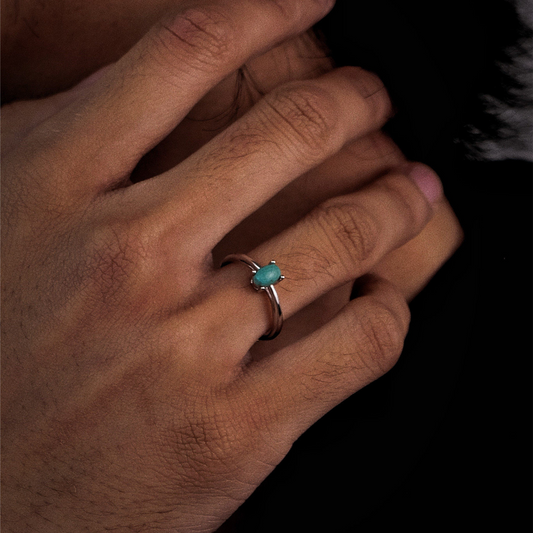
An oval turquoise ring with an openwork silver band and a structured silhouette.
Review stone and setting details
 Mandala Ring
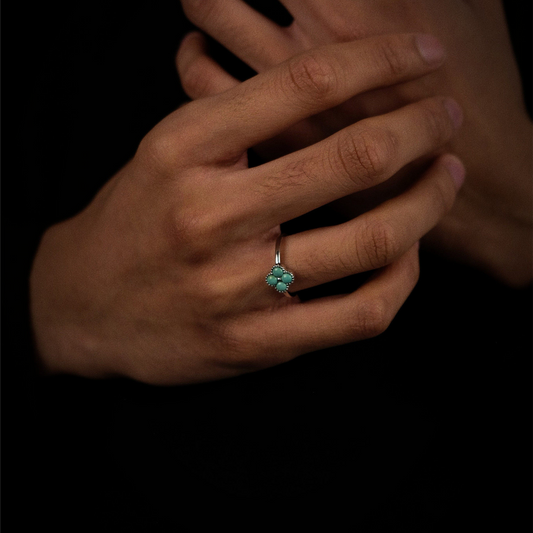
A multi-stone design that creates a more detailed pattern within a silver setting.
Review stone and setting details
 Horizon Ring
An elongated turquoise signet style with a horizontal profile and polished silver band.
Review stone and band details
Explore the full TaShi Tibetan Turquoise Ring Collection to compare statement, simple, openwork, signet, and multi-stone designs.
Shop Tibetan Turquoise Rings