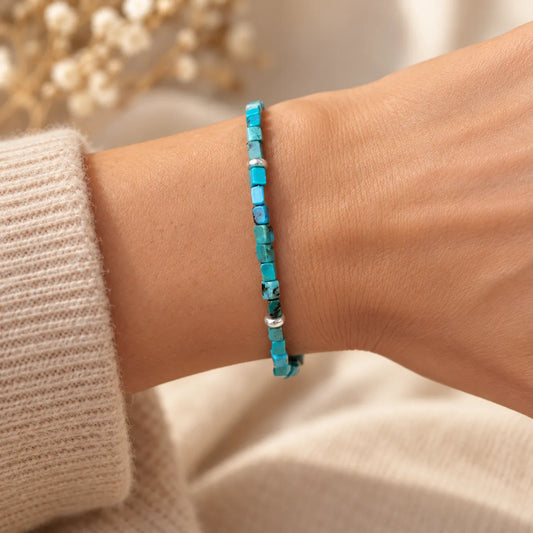
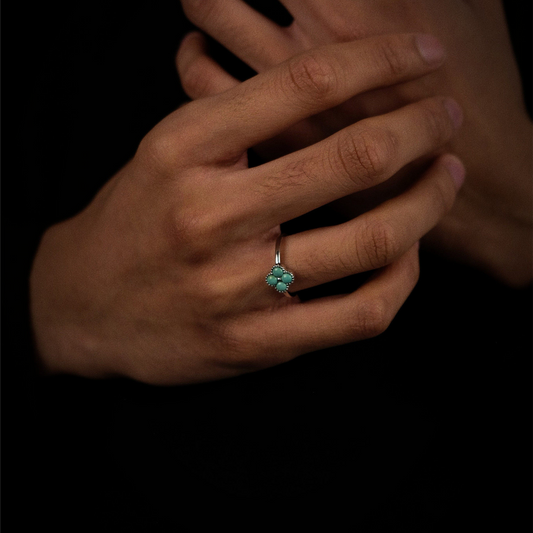
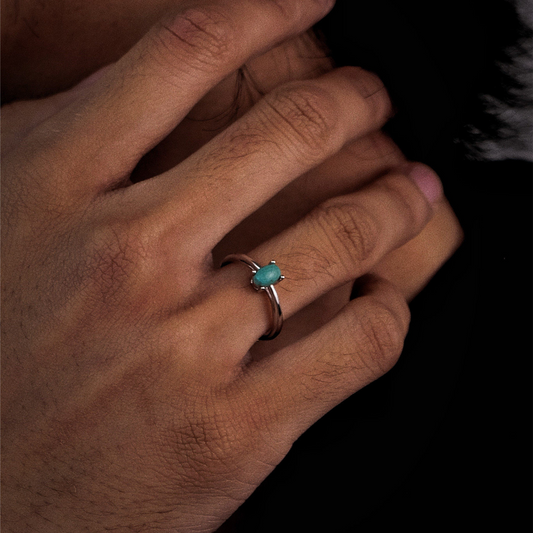
Turquoise is a traditional December birthstone. Its commonly discussed meanings include protection, calm, and communication, but these belong to history, culture, and personal symbolism—not proven scientific or medical effects.
When choosing turquoise birthstone jewelry, separate the symbolic meaning from the buying evidence: check the stone description, treatment disclosure, metal information, origin claims, construction, care instructions, and return policy.
Turquoise remains popular as a December birthstone because it combines a clear calendar connection with visible variation in blue-green color, pattern, texture, and shape. Those features can make a piece feel personal, but they should not be treated as proof of authenticity or treatment status.
A birthstone can be a marker for a birthday, a gift, or a personal milestone. Its meaning comes from the wearer and the relationship behind the piece. The material facts still need to be stated separately and supported by the seller's product information.
What Does the Turquoise Birthstone Mean?
Turquoise has been associated with protection, calm, communication, friendship, and personal connection in different historical and cultural traditions. These associations explain why people may choose turquoise as a gift or personal keepsake.
In modern jewelry, a turquoise birthstone can also function as a simple reminder of a month, person, or life stage. The cool surface, color, and weight of the jewelry are physical qualities. They may support a personal ritual or memory, but they do not establish a medical, psychological, or spiritual effect.
For a broader look at symbolic language around turquoise, read our Tibetan Turquoise Meaning and Symbolism Guide. This article keeps the focus on birthstone meaning, material boundaries, and jewelry selection.
Is Turquoise a December Birthstone?
Yes. Turquoise is traditionally recognized as a December birthstone. It is commonly listed alongside other December birthstone options, including zircon and tanzanite. The Gemological Institute of America December birthstones guide includes turquoise and describes its blue-to-green color range and possible matrix.
The December connection gives turquoise jewelry a clear reason for gifting, but it does not determine the best jewelry form. A ring, necklace, bracelet, or pair of earrings will suit different people and daily routines.

Turquoise Birthstone Symbolism and Its Limits
Protection, calm, and communication are symbolic interpretations of turquoise found in cultural and personal contexts. They are not scientific or medical effects, and a seller should not present them as guaranteed outcomes.
A piece of jewelry can still carry meaning. It may remind someone of a relationship, a birthday, a new chapter, or a personal intention. That meaning comes from the wearer and the context of the gift rather than from a proven property of the stone.
This distinction matters for product descriptions. It is reasonable to describe turquoise as a December birthstone or to explain a historical association. It is not reasonable to promise that wearing it will treat anxiety, improve communication, provide protection, or change a person's health.
What Color and Matrix Can—and Cannot—Tell You
Turquoise can show differences in blue or green tone, visible matrix, surface texture, and stone shape. These features affect the appearance of a finished piece and may help a buyer compare designs.
They cannot, on their own, prove that a stone is natural, untreated, from a particular origin, or authentic. Matrix is not an authenticity certificate. A very even-looking stone is not automatically an imitation, and an irregular-looking stone is not automatically untreated.
For those questions, check the seller's material, treatment, and origin disclosure. If the listing does not state whether the stone has been stabilized, dyed, filled, or otherwise treated, the correct conclusion is that the information is not confirmed.
Our guide on how to identify real turquoise provides additional buying context, but no single visual feature should replace reliable product information or professional testing when the purchase requires a higher level of certainty.

Ring, Necklace, Bracelet, or Earrings?
The jewelry form determines where the birthstone fits into daily life and what practical questions need to be answered.
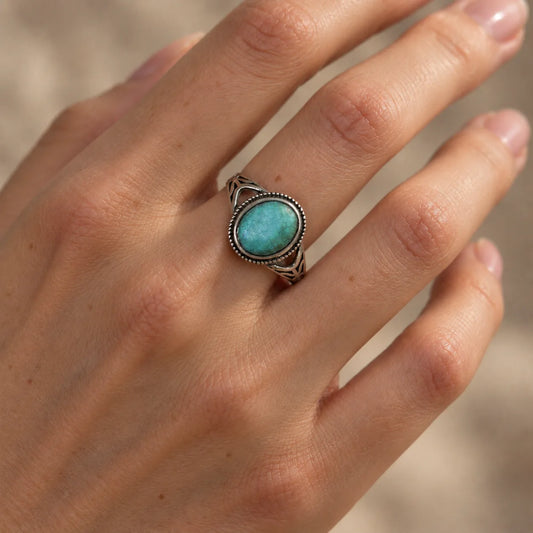
A December birthstone ring requires accurate sizing and may be noticed during hand movement. Check ring size, setting construction, and whether the recipient prefers a visible piece.
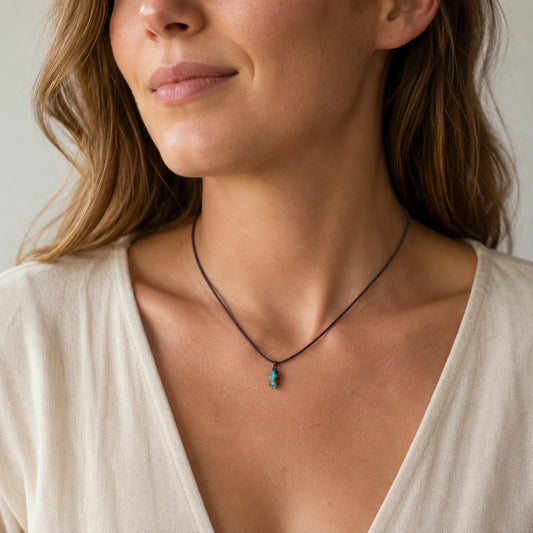
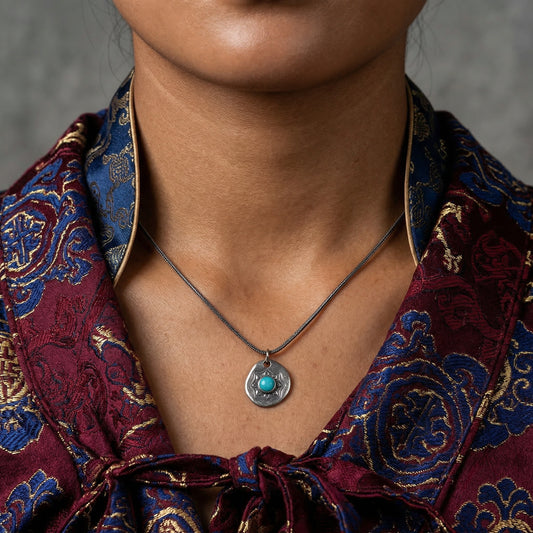
A December birthstone necklace requires attention to chain length, pendant scale, and how it sits with the recipient's usual neckline.
A December birthstone bracelet requires a suitable wrist measurement or an adjustable design. Check fit, movement, closure, and whether the recipient regularly wears bracelets.
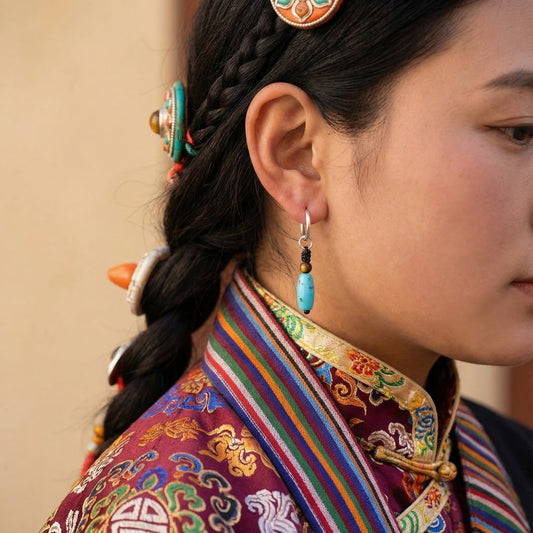
December birthstone earrings do not require ring or wrist sizing, but they still require checks for pierced ears, metal sensitivity, weight, dimensions, and closure type.

How to Choose Turquoise Birthstone Jewelry
Choose the jewelry form from the person's actual habits rather than from the symbolic meaning alone.
- Check wearability: consider ring size, wrist size, ear piercings, necklace length, weight, and closure.
- Check visible design: compare color, matrix, shape, scale, and setting without treating appearance as proof of authenticity.
- Check the listing: read the metal, stone, treatment, construction, care, and return information.
- Check the wardrobe: turquoise can work with white shirts, knitwear, dark clothing, denim, and simple neutral outfits, but the scale should match the recipient's style.
- Check the gift context: a ring may feel more personal, while earrings or a bracelet may be easier when measurements are uncertain.
Do not assume that the words “natural,” “untreated,” or “925 sterling silver” apply to every piece in a collection. Use those terms only when the specific product page provides clear evidence for them.
Materials, Treatment, and Seller Disclosure
A reliable product description should separate what is visible from what is documented. Color, matrix, and texture describe the appearance of the stone. They do not establish treatment status, origin, or authenticity.
Look for direct information about the turquoise material, any stabilization, dye, resin, filling, or other treatment, and the metal components. A silver-colored surface is not automatically sterling silver. If the product page does not confirm a material, it should not be presented as confirmed.
Origin claims also require evidence. A name such as “Tibetan,” “Himalayan,” or a mine reference should not be treated as proof of origin unless the seller can support the claim. When an important detail is missing, ask before purchasing or treat it as unknown.

Explore turquoise jewelry by the way it will be worn, while reviewing the material and care details for each specific piece.
Everyday Care
Turquoise care depends on the stone, setting, and any treatment disclosed by the seller. As a general precaution, keep turquoise away from harsh chemicals, perfume, cosmetics, prolonged water exposure, and high heat.
- Remove turquoise jewelry before swimming, showering, exercising, or cleaning.
- Put jewelry on after skincare, perfume, and hairspray.
- Wipe it gently with a soft, dry cloth after wear unless the product instructions say otherwise.
- Store it separately from harder jewelry to reduce rubbing and scratching.
- Do not use steam or ultrasonic cleaners on turquoise jewelry.
When the treatment status or construction is unclear, follow the seller's specific care instructions rather than assuming that every turquoise piece can be cleaned in the same way.
FAQ: Turquoise Birthstone Meaning
Yes. Turquoise is traditionally recognized as a December birthstone and is commonly listed with other December birthstone options such as zircon and tanzanite.
Protection, calm, communication, friendship, and personal connection are historical, cultural, or personal symbolic associations. They are not scientific or medical effects.
No. Matrix is a visible feature, but it cannot prove that turquoise is natural, untreated, from a particular origin, or authentic.
No. Color, texture, shape, and uniformity can help describe appearance, but they cannot replace material, treatment, origin disclosure, or professional testing where needed.
No. Those terms should be used only when the specific product has clear evidence supporting them. A collection name or photograph is not enough.
It depends on the recipient. Rings require size, necklaces require length preference, bracelets require wrist fit, and earrings require pierced ears, suitable metal, comfortable weight, and an appropriate closure.
Explore Turquoise Birthstone Jewelry
Choose a ring, necklace, bracelet, or pair of earrings based on the wearer's style, fit, and daily routine.
Review the material, treatment, care, and return information for the specific piece before ordering.
Explore December Birthstone Jewelry