Tibetan Turquoise Meaning: Spiritual Symbolism, Grounding & Jewelry
Tibetan turquoise meaning is commonly discussed through spiritual symbolism, personal meaning, and the stone's visible material character. Wearers may associate it with protection, steadiness, honest expression, or grounding, but these are cultural or personal interpretations—not medical effects.
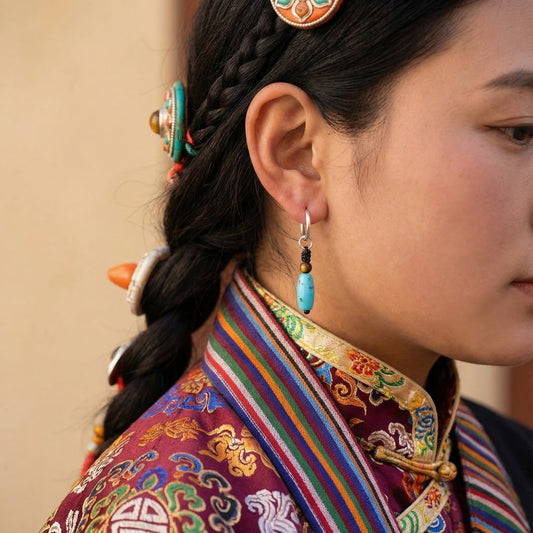
Turquoise has been used in jewelry and symbolic objects across different cultures. Today, a turquoise ring, bracelet, or pendant may serve as a personal reminder of steadiness, connection, or a meaningful life transition.
This guide explains what people mean by Tibetan turquoise, how matrix affects its appearance, how symbolic grounding differs from a health claim, and what to consider when choosing turquoise jewelry.
Evidence boundary: turquoise is not a treatment for anxiety or any other medical condition. Any grounding or calming benefit described here refers to a personal sensory ritual or symbolic reminder, not a clinically established effect.
What Is Tibetan Turquoise?
The label “Tibetan turquoise” may describe a cultural association, a jewelry style, or seller terminology; it does not by itself prove a particular mine or geographic origin. Turquoise is a blue-to-green mineral, and individual stones can differ in color, matrix, texture, and treatment.
In jewelry, people may value turquoise for its color, matrix, texture, and connection to a personal story. A turquoise ring, pendant, or bracelet can also become an object someone chooses to touch during a pause, transition, or reflective routine.
If you are learning how to identify real turquoise before buying, read our guide to how to identify real turquoise.
Tibetan Turquoise Spiritual Meaning
The spiritual meaning of Tibetan turquoise is often interpreted through ideas such as protection, courage, honest expression, and steadiness. These associations vary by culture, seller, and wearer; they should be presented as symbolism rather than guaranteed properties.
For some wearers, turquoise represents a boundary, a personal intention, or a reminder to return attention to the present. The stone does not remove difficulty or create safety by itself.
That is why someone may choose to wear turquoise during travel, transition, new beginnings, or periods of pressure. The meaning comes from the wearer’s interpretation and repeated use, not from a guaranteed effect of the material.

What People Often Value in Tibetan Turquoise
When people search for Tibetan turquoise benefits, they may be asking about symbolism, sensory experience, or the practical reasons to choose one piece of jewelry over another. Those questions should be separated from claims that a stone can treat a health condition.
The qualities people most often describe are best understood in three layers:
- Symbolic protection: some wearers use turquoise to represent a personal boundary or intention.
- Sensory grounding: its weight, coolness, and texture may give the wearer a physical cue for a pause or reflective routine.
- Personal memory: worn over time, a turquoise piece can become tied to a life stage, relationship, transition, or private ritual.
These are personal or symbolic benefits, not medical outcomes. Their value can come from meaning, repetition, touch, and the relationship built with an object worn close to the skin.
Why the Dark Matrix Matters
The dark veins in turquoise are called matrix. In commercial descriptions, matrix may be discussed as a feature, a preference, or a characteristic of the material. Whether someone likes it is a matter of appearance and personal taste.
Matrix can give the surface contrast and texture, although its presence alone does not prove that a stone is natural, untreated, or from a particular region. Buyers should rely on specific material and treatment disclosures rather than appearance alone.

For some wearers, this visible variation makes the piece feel more individual. That emotional interpretation can be meaningful, but it is not evidence of a stone’s authenticity, treatment status, or healing ability.
How Jewelry Can Become a Personal Grounding Reminder
Grounding can mean directing attention back to present sensory information. Jewelry may become part of a personal grounding routine because it is easy to touch, hold, notice, and associate with a deliberate pause.
During a stressful moment, a stone can give the hand something concrete to notice. You might trace a vein with your thumb, notice the coolness of silver, or feel the weight of a pendant against your chest.
This is one reason turquoise jewelry may become a wearable reminder. It does not fix a situation or regulate a medical condition; it can simply mark a pause before you decide what to do next.
For a more step-by-step sensory routine, read our guide to somatic grounding rituals. This article stays focused on the meaning and material of turquoise as a wearable reminder.
How to Wear Tibetan Turquoise as a Daily Anchor
The most meaningful turquoise piece is not always the largest or brightest one. It is the one you naturally reach for when you need to steady yourself.
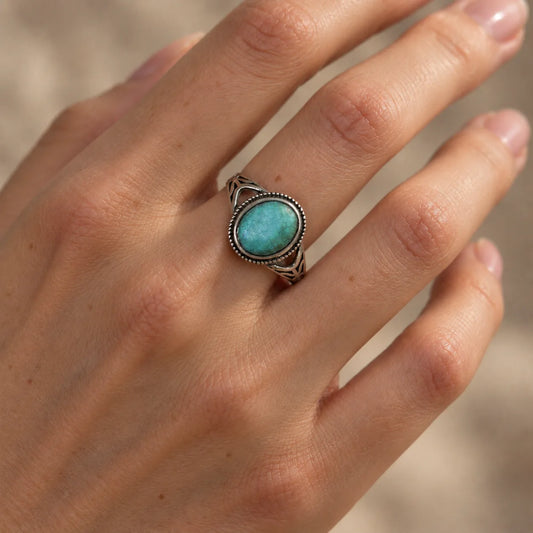
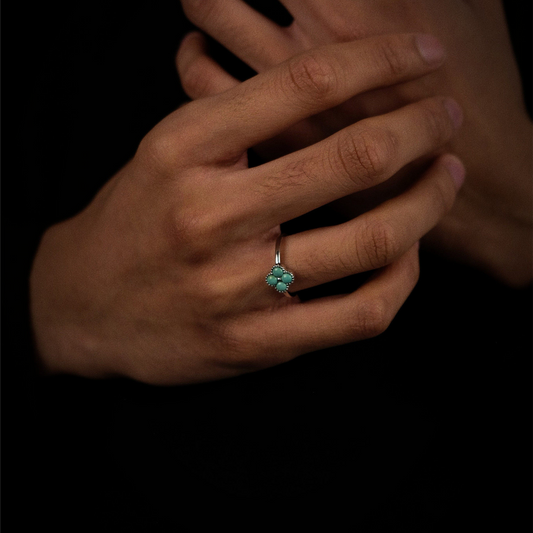
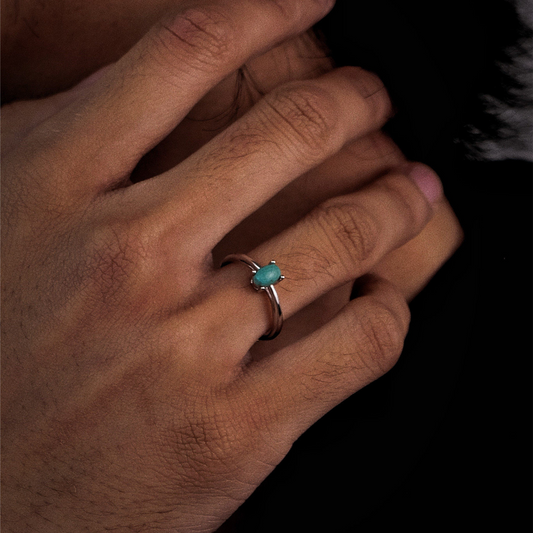
- Wear a ring if you want a discreet tactile ritual you can return to during meetings, travel, or difficult conversations.
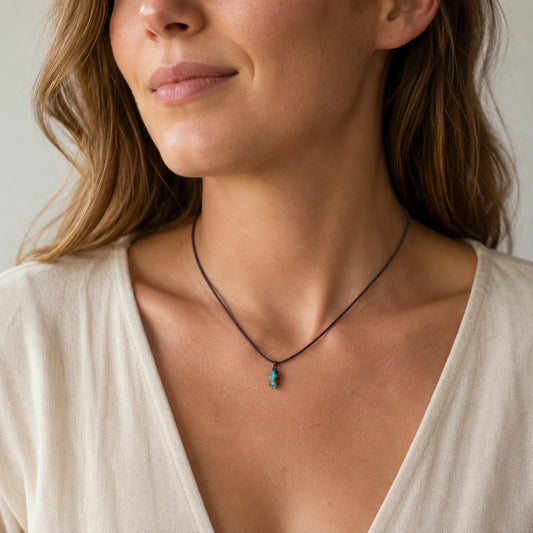
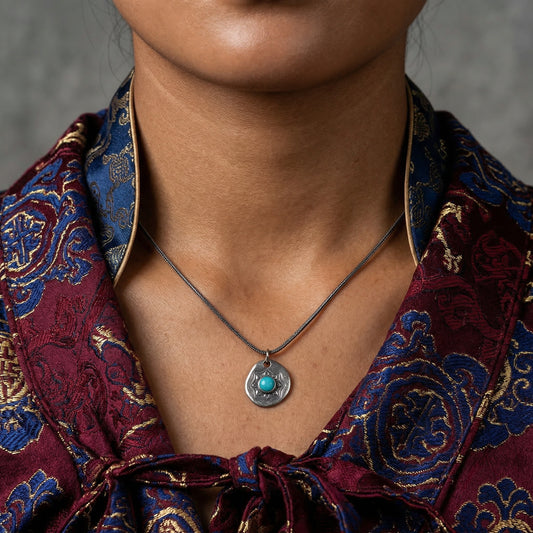
- Wear a pendant if you want the stone close to the heart and easy to hold during breathing rituals.
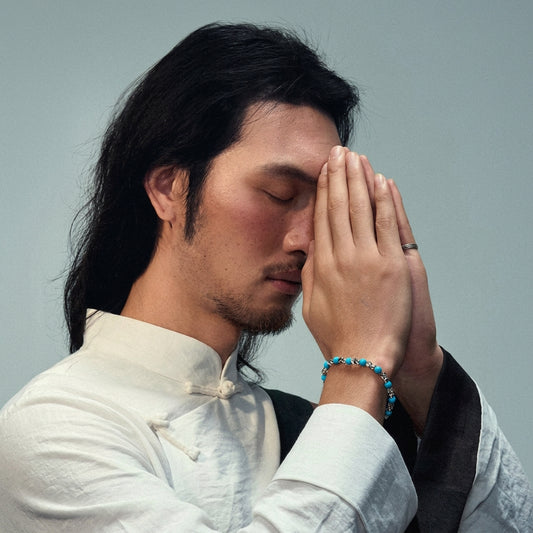
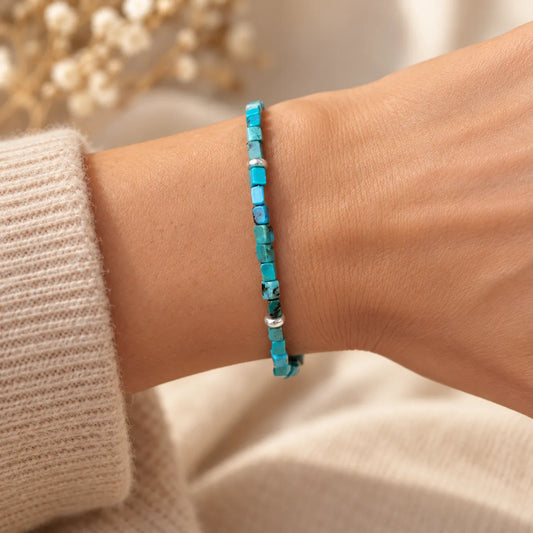
- Wear a bracelet if you want weight and movement on the wrist as a repeated reminder to slow down.

To use your turquoise as a daily anchor, try this simple practice:
- Notice the trigger: tight chest, fast thoughts, shallow breath, or emotional overload.
- Touch the stone: place your thumb on the matrix, edge, or setting.
- Slow your breath: breathe out longer than you breathe in.
- Name the present: silently say, "I am here. This is now. I can move one step at a time."
This kind of ritual is small, but small things are often what the body can actually use in a difficult moment.
Calming Crystals, Stress, and Personal Meaning
Some people discover turquoise while searching for calming crystals, calming stones, or jewelry with personal meaning. A physical object can be a useful reminder to slow down, but the reminder should not be confused with a proven treatment.
A wearer may connect turquoise with protection or steadiness while noticing its weight and texture. That combination of meaning and sensation can make a personal ritual feel concrete, without proving that turquoise creates emotional safety or treats anxiety.
The practical value is modest and personal: the piece can mark a pause, a breath, or an intention. It should be used with realistic expectations and never as a substitute for appropriate professional care.
What to Look for in Calming Jewelry
If you are choosing jewelry as a personal grounding reminder, avoid pieces that promise too much. A better piece offers a clear sensory cue and a meaning that feels steady to you.
- Texture: matrix, edges, beads, or silver details give the fingers something real to notice.
- Comfortable weight: the piece should feel present without becoming distracting.
- Wearable placement: rings, bracelets, and pendants work well because they are easy to touch.
- Quiet meaning: choose a piece that feels grounding to you, not one that relies on dramatic claims.
How to Choose Meaningful Tibetan Turquoise Jewelry
When choosing Tibetan turquoise jewelry, look for a piece that feels connected to your life, not only your outfit.
- Choose texture if you want a stronger tactile grounding experience.
- Choose visible matrix if the idea of resilience and imperfection speaks to you.
- Choose comfortable weight if you want the piece to feel physically present.
- Choose a form you will wear often because meaning deepens through repetition.
You can review Tibetan turquoise jewelry or Tibetan turquoise rings to compare forms, stone character, and everyday wearing preferences.
FAQ: Tibetan Turquoise Meaning
What does Tibetan turquoise mean?
Tibetan turquoise meaning is commonly associated with protection, grounding, resilience, and honest expression. These are symbolic or personal interpretations rather than guaranteed effects.
What is the spiritual meaning of Tibetan turquoise?
The spiritual meaning of Tibetan turquoise is often interpreted through protection and inner steadiness. The exact symbolism varies by cultural context and by the person wearing the piece.
What is Tibetan turquoise good for?
Tibetan turquoise may be chosen for symbolic protection, tactile awareness, mindful wearing, or meaningful gifting. It can serve as a personal reminder to pause and notice the present, but it is not a medical tool.
What are calming crystals for anxiety?
Calming crystals for anxiety are stones some people use as symbolic or tactile reminders during stress. They should not be treated as medical tools or a replacement for professional support; any routine should be based on realistic expectations.
Can jewelry be a grounding object?
Yes, in a personal and sensory sense. Jewelry can act as a grounding reminder when it has texture, weight, and a placement that makes it easy to notice. A ring, bracelet, or pendant can give attention somewhere physical to land during a difficult moment.
Is Tibetan turquoise real turquoise?
The label alone does not establish whether a piece is genuine turquoise. Buyers should review material, treatment, and origin disclosures and should not rely on matrix or color alone. If authenticity matters, read our guide to identifying real turquoise.
Why does Tibetan turquoise have dark veins?
The dark veins are commonly called matrix. They may reflect surrounding host rock or other material features, but matrix alone cannot prove that a stone is natural, untreated, or from Tibet. Many wearers simply value the contrast and individuality it gives the piece.
Can Tibetan turquoise help with anxiety?
Tibetan turquoise does not treat or cure anxiety and does not replace professional care. A wearer may use it as a personal grounding reminder by noticing its cool, textured surface during stress.
How should I care for Tibetan turquoise jewelry?
Follow the seller's care instructions where available. In general, keep turquoise away from harsh chemicals, perfumes, ultrasonic cleaners, and prolonged moisture. Wipe it gently with a soft dry cloth and store it separately from harder jewelry that may scratch the surface.

Carry Meaning Close to the Body
Tibetan turquoise is not only a stone to look at. It is also a material people may choose to touch, wear, remember, and connect with. Its meaning can live in the relationship between body and object: the hand that reaches for it, the pause around it, and the intention it represents.
Turquoise offers a visible kind of beauty: color variation, matrix, and texture can remain part of the design. Those features may appeal to buyers who prefer jewelry that does not look completely uniform.
For the right wearer, that can make the piece feel present and personal. The meaning comes from the object, the design, and the story attached to it—not from an unverified promise.
Explore related TaShi pieces:
Sources and fact boundary: For mineral background, see the Gemological Institute of America overview of turquoise. For jewelry treatment and marketing disclosures, see the U.S. Federal Trade Commission Jewelry Guides. Symbolic meanings in this article are presented as cultural or personal interpretations, not scientific or medical claims.