If a turquoise listing says “stabilized,” it can feel like a warning sign at first. Many buyers see the word and wonder whether the stone is still real turquoise, whether it is fake, or whether the seller is trying to hide something.
The calmer answer is this: stabilized turquoise may still be real turquoise, but it has been treated. The important question is not whether the word sounds good or bad. The important question is whether the seller explains the treatment clearly enough for you to understand what you are buying.
This guide keeps the focus narrow. It explains what stabilized turquoise means, how it differs from untreated turquoise, dyed material, reconstructed material, and reconstituted material, and why disclosure matters before you buy jewelry.
What “stabilized turquoise” means before you buy
- Stabilized does not automatically mean fake. It means treatment has entered the material story.
- Real and untreated are different claims. A stone can be real turquoise and still be stabilized.
- Disclosure matters. The seller should explain what is known, treated, or unknown.
What Is Stabilized Turquoise?
Stabilized turquoise is turquoise that has been treated to improve strength, durability, or surface stability. Turquoise can be porous or softer than buyers expect, especially when it is used in jewelry that will be handled, worn, and exposed to daily friction.
Stabilization does not automatically mean the stone is fake. It means the stone has gone through a treatment process. The seller should make that treatment status clear instead of relying only on broad words like “real,” “natural,” or “genuine.”
For a buyer, the useful question is simple: is the listing separating stone identity from treatment status?
Is Stabilized Turquoise Real Turquoise?
Stabilized turquoise can still be real turquoise if the underlying material is turquoise. Treatment does not automatically erase the stone identity.
But “real turquoise” and “untreated turquoise” are not the same claim. A seller who uses those words carefully should be able to explain the difference. If a listing says “real turquoise” but never mentions treatment, that does not prove the stone is untreated. It only leaves an important question unanswered.
That is why stabilized turquoise should be understood as a disclosure issue. A transparent seller can say what is known, what is treated, and what is not known.
Stabilized vs Untreated Turquoise

Untreated turquoise means the stone has not been stabilized, dyed, reconstructed, or otherwise materially altered in ways that change how it should be described to a buyer.
Stabilized turquoise means the stone has been treated to improve usability or durability. It may be more suitable for certain jewelry forms, but it should not be described as untreated.
The boundary is not about shame. It is about accuracy. A buyer may still choose stabilized turquoise if the piece is beautiful, wearable, fairly priced, and clearly described. The problem starts when treatment is hidden or blurred.
Stabilized vs Dyed, Reconstructed, and Reconstituted Turquoise
Stabilized turquoise should not be automatically grouped with dyed imitation or reconstructed material.
Dyed material means color has been added or altered. Reconstructed or reconstituted material often refers to small particles or fragments that have been combined with binder or other material to form a usable piece. Those are different disclosure questions from stabilization.
For a buyer, the practical job is to notice which category the seller is actually claiming. If a listing only says “turquoise” but avoids treatment words entirely, you do not have enough information to judge the claim.
What Should a Seller Disclose?
A useful listing should make treatment easy to understand.
- what the stone is;
- whether treatment is known;
- whether the stone is described as untreated, stabilized, dyed, reconstructed, or reconstituted;
- whether the seller is willing to clarify unknown treatment status;
- whether product photos support the description.
The best disclosure is not always the most dramatic. Clear language is better than vague certainty. “Treatment not specified in current product information” is more honest than pretending a seller knows what they cannot support.
How Treatment Affects Buying Confidence
Treatment can affect how a buyer thinks about value, wearability, and trust.
That does not mean stabilized turquoise is automatically low quality. It also does not mean untreated turquoise is automatically better for every person. The better question is whether the product page gives you enough information to compare the piece fairly.
If your main question is price, use a value-focused guide. If your question is whether a listing provides enough information before checkout, use a buying checklist. Treatment is one part of that larger decision, not the whole decision.
Product Details That Help You Ask Better Questions
Actual product pages can help you see what kind of evidence is available, but they should not be treated as proof of treatment status unless the product data says so.

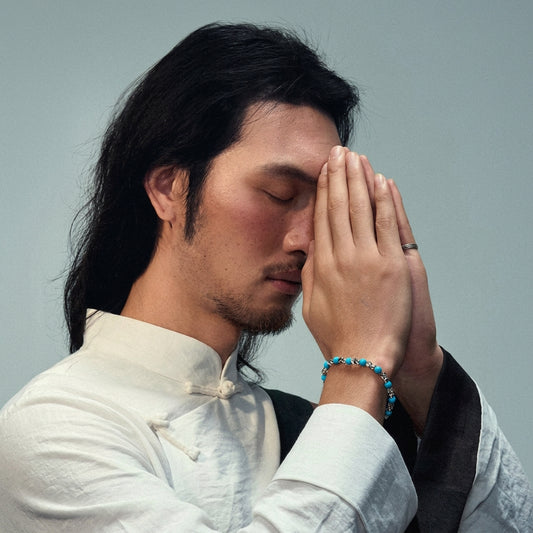
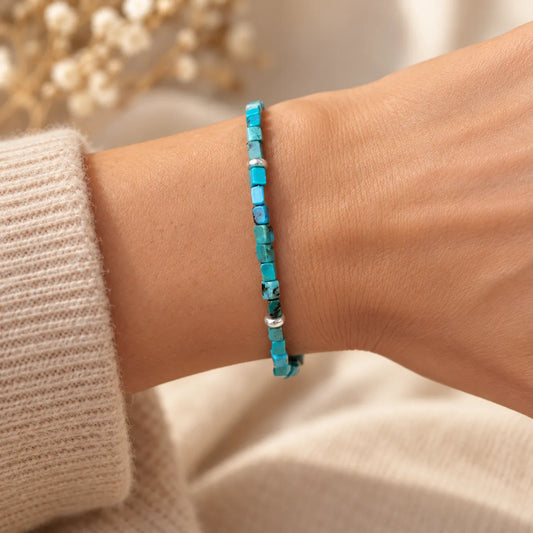
Clarity Bracelet
The Clarity Bracelet is useful because its precision-cut Tibetan turquoise cubes create clear stone edges and repeated forms. That makes it easier to inspect stone shape, visible surface character, and spacing, while still asking whether treatment is disclosed.

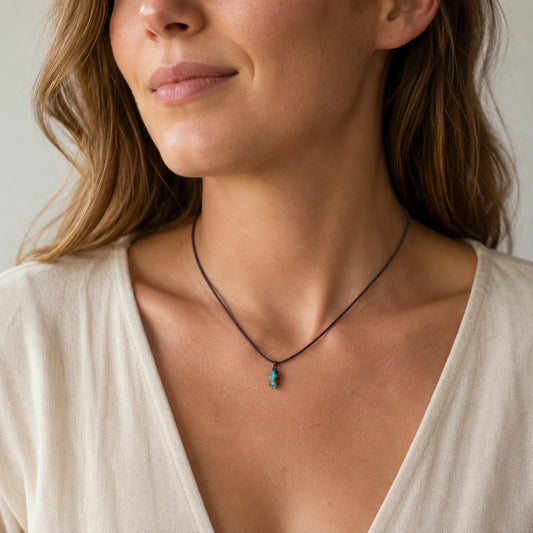
Plateau Stream Necklace
The Plateau Stream Necklace uses many irregular turquoise chips across the full necklace rather than one central pendant. It is useful for comparing visible stone-to-stone variation, color differences, and how much product photography is available.

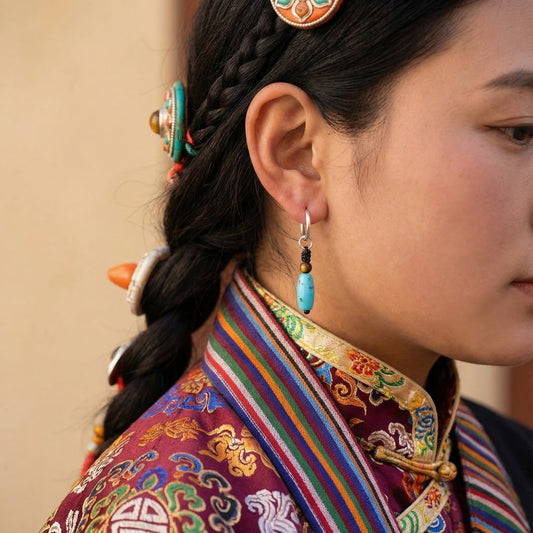
Grounding Drops
The Grounding Drops show multiple irregular turquoise nuggets with silver cube spacers. The layered form helps a buyer understand why close-up photos and treatment wording matter when a piece contains several stones, not just one focal stone.

Compare With Clearer Questions
When you browse Tibetan turquoise jewelry, compare what each product page says about stone identity, treatment disclosure, visible detail, and what remains unknown.
Compare Tibetan Turquoise JewelryFAQ
Is stabilized turquoise fake?
Not automatically. Stabilized turquoise may still be real turquoise, but it has been treated. The important issue is whether the treatment is disclosed clearly.
Is stabilized turquoise the same as dyed turquoise?
No. Stabilization and dyeing are different treatment questions. Dye changes or adds color; stabilization is usually discussed as a strengthening or durability-related treatment. A seller should describe the specific treatment rather than using vague language.
Is untreated turquoise always better?
Not for every buyer. Untreated turquoise may matter to collectors, but a jewelry buyer may also care about wearability, design, price, and transparency. The key is accurate disclosure.
Should a seller say if turquoise is stabilized?
Yes. If treatment is known, it should be stated plainly. If it is not known, honest uncertainty is better than unsupported claims.
What should I do if a listing does not mention treatment?
Ask one clear question before buying: “Is this turquoise untreated, stabilized, dyed, reconstructed, or otherwise treated?” If the seller cannot answer, decide whether the uncertainty still fits the price and your comfort level.