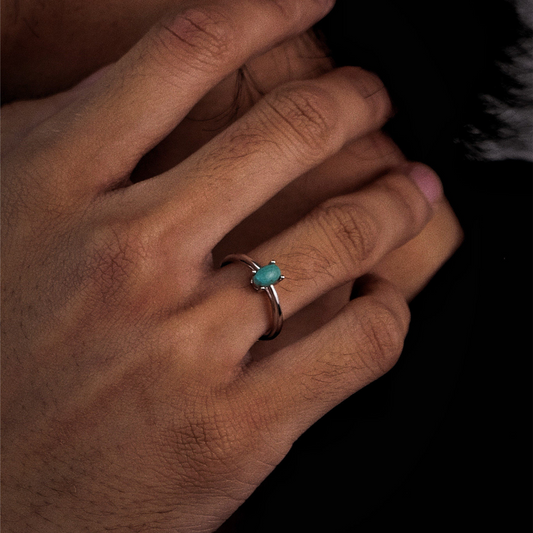
What Is Turquoise? Meaning, Color & Jewelry Basics

Turquoise is a blue-green phosphate mineral containing copper and aluminum. It has been used in jewelry for centuries and can vary in color, matrix, texture, and treatment. Those differences are normal, but they should be described clearly. This guide explains how turquoise forms, why it ranges from sky blue to earthy green, what matrix means, and which material details matter when choosing jewelry.
It also explains how the term Tibetan turquoise is used in jewelry descriptions, why cultural meaning should be distinguished from verified geographic origin, and how to compare a piece before buying.
What Is Turquoise?
Turquoise is a hydrous phosphate mineral containing copper and aluminum. It forms over long periods of time when water moves through mineral-rich rock and leaves deposits in cracks, veins, or porous areas of the host stone. This natural formation process is one reason turquoise can look so different from piece to piece.
The color of turquoise is closely connected to the minerals around it:
- Blue tones are often associated with copper-rich material.
- Green or greenish-blue tones may appear when iron, zinc, or surrounding earth minerals influence the stone.
- Matrix refers to the darker host-rock lines, webs, or patches that remain visible within the turquoise.
Because turquoise can be natural, stabilized, treated, or imitated, the word “turquoise†alone does not tell the full story. A trustworthy piece should be supported by product-specific details about material, treatment, color, and setting.

Why Turquoise Color and Matrix Vary
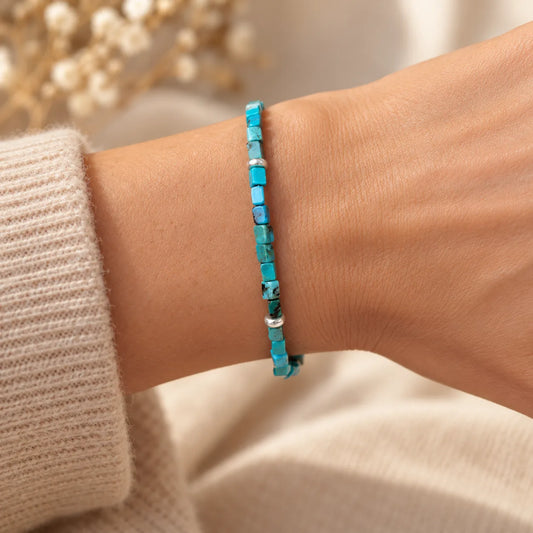
One of the most recognizable features of turquoise is its range of color. Some stones are soft blue, some are bright blue-green, and others lean toward deeper green or earthy teal. These differences are not automatically signs of better or worse quality. They are part of the stone’s material story.
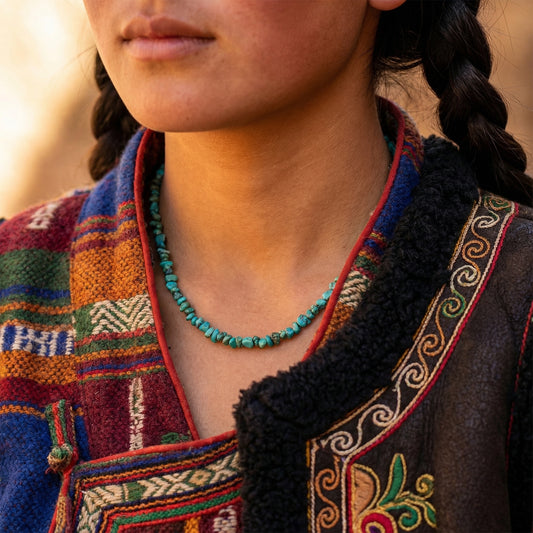
Matrix also varies widely. Some turquoise has very little visible matrix, while other pieces show dark webbing, brown host-rock lines, or irregular earthy markings. In jewelry, matrix can give turquoise a more grounded, natural look, especially when the design keeps the stone’s character visible rather than hiding every irregular detail.
If you are comparing turquoise jewelry, it is better to look for clear descriptions than perfect uniformity. Color, matrix, finish, and setting should feel intentional and honestly represented.
What Is Tibetan Turquoise?
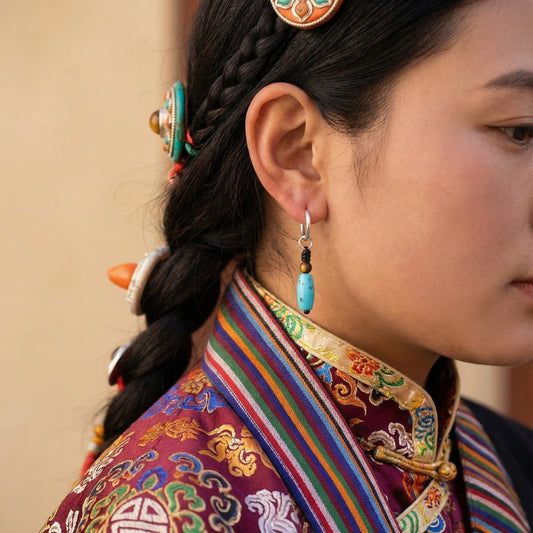
In jewelry descriptions, Tibetan turquoise is often associated with deeper greenish-blue tones, visible matrix, and an earthy surface character. In Tibetan cultural contexts, turquoise is traditionally known as གཡུ (Yu) and has been valued in personal adornment and heirloom jewelry. The label “Tibetan†should not be treated as proof of a specific mine or geographic origin unless that information is documented.
For many wearers, Tibetan turquoise is meaningful not because it promises a guaranteed effect, but because it carries a sense of continuity, place, and symbolism. It can represent protection, steadiness, remembrance, and connection to the natural world, depending on the cultural or personal context in which it is worn.
At Tashi Turquoise, we treat that symbolism with care. A stone’s meaning should not replace material transparency. Whether a piece is described as Tibetan turquoise, stabilized turquoise, or turquoise jewelry, the material details still matter.

What Sets Tibetan Turquoise Apart?
Tibetan turquoise is often appreciated for its less polished, more organic presence. Compared with very smooth and uniform turquoise cabochons, many Tibetan turquoise pieces show visible matrix, color depth, and natural variation. These details can make the stone feel more tactile and individual.
Matrix is sometimes called a spiderweb pattern when the host-rock lines form a web-like structure across the surface. This can be beautiful and distinctive, but it should not be treated as automatic proof of authenticity. Matrix is one visual clue among many. To understand a stone more clearly, it is still important to consider product information, treatment disclosure, finish, and seller transparency.
For a deeper guide to visual clues and material checks, read our guide on how to identify authentic Tibetan turquoise.

Turquoise Meaning in Jewelry
Turquoise has carried symbolic meaning across many cultures. It is often connected with sky, water, earth, travel, protection, and calm. In modern jewelry, many people choose turquoise not because they expect the stone to solve something for them, but because it gives a quiet visual reminder to slow down, return to the body, and stay connected to something natural.
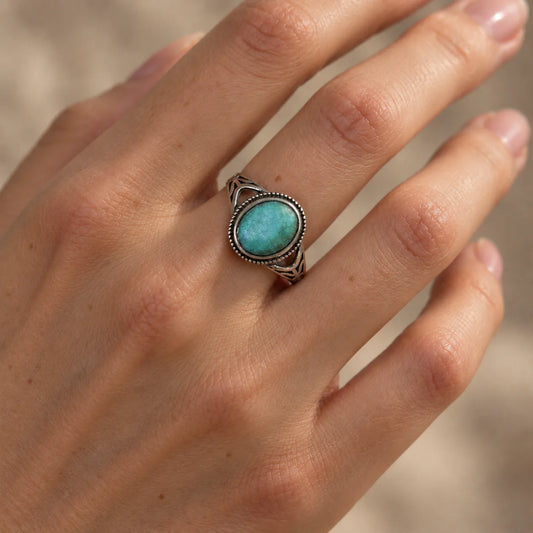
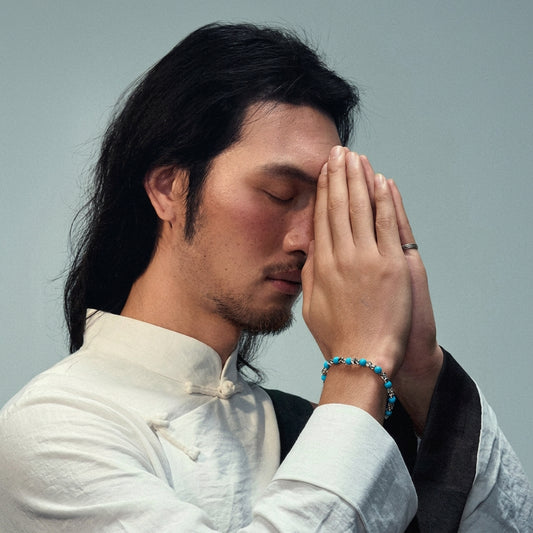
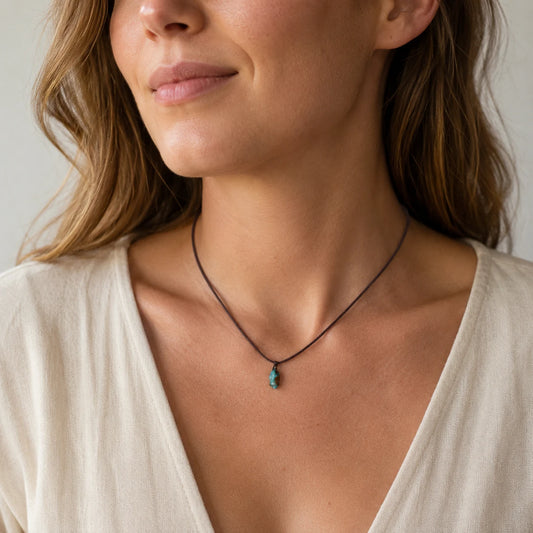
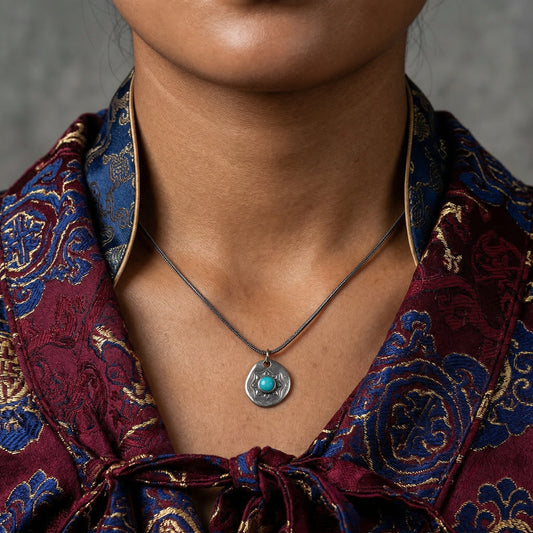
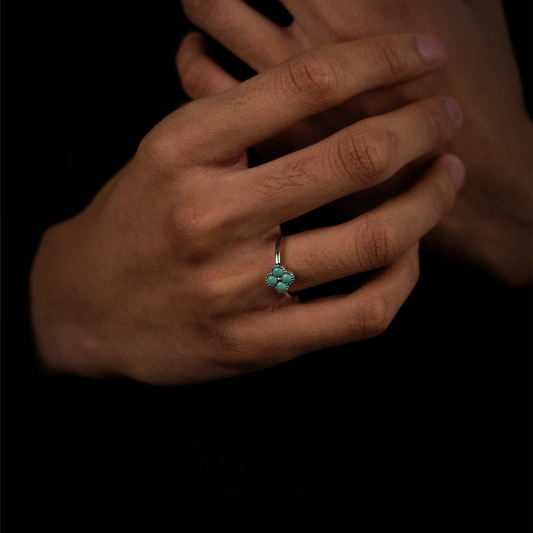
This is where turquoise can feel especially personal. A ring, pendant, bracelet, or pair of earrings can become part of a daily rhythm. It may be worn for color, texture, memory, cultural appreciation, or simply because the stone gives the wearer a distinctive visual and tactile point of attention.

How to Choose Turquoise Jewelry
When choosing turquoise jewelry, look beyond color alone. A useful product description should help you understand what you are actually buying. Pay attention to:
- Material description: Is the stone described clearly, without vague or exaggerated claims?
- Treatment disclosure: Does the product explain whether the material is natural, stabilized, treated, or imitation when that information is available?
- Color and matrix: Do the photos show the actual variation of the stone?
- Setting and wearability: Is the piece designed for the way you plan to wear it?
- Seller transparency: Are the images, descriptions, and care notes specific enough to make you feel informed?
The best turquoise jewelry does not need to sound perfect. It should feel honest, specific, and aligned with how you want to wear the piece.
Frequently Asked Questions
Q: What is turquoise?
A: Turquoise is a blue-green mineral commonly used in jewelry. Its color, matrix, and surface character can vary from stone to stone, so each piece is best understood through its specific material details rather than broad general descriptions.
Q: Can turquoise jewelry have different treatments?
A: Yes. Turquoise jewelry may use natural, stabilized, treated, or imitation material, depending on the piece. Any claim about treatment, origin, or material type should be supported by product-specific information rather than assumed from the word “turquoise†alone.
Q: Why is some turquoise more green than blue?
A: Turquoise color can shift because of the minerals present during formation. Copper is often associated with blue tones, while iron, zinc, or surrounding earth minerals may contribute to greener or more muted shades.
Q: Does matrix prove turquoise is authentic?
A: No. Matrix can be an important visual feature, but it should not be treated as proof by itself. Authenticity depends on several factors, including material details, treatment disclosure, product evidence, and seller transparency.
Explore Tibetan turquoise jewelry with clear material details, natural variation, and grounded everyday meaning in Earth's Offerings.