Introduction: Why the Jewelry Graveyard Happens
Most jewelry boxes have a quiet corner full of pieces that once felt exciting: a trendy ring that tarnished too quickly, a necklace bought for one outfit, a bracelet that looked good online but never felt like you. That forgotten pile is the "jewelry graveyard."
Fast fashion jewelry creates that cycle easily. It gives a quick visual thrill, but it often lacks the material quality, emotional weight, and long-term wearability needed to stay in your life. The piece may match a trend, but it rarely becomes part of your story.
Heirloom jewelry offers a different answer. Instead of asking what looks new this month, it asks what is worth keeping for years. At TashiTurquoise, that question leads us back to enduring materials, visible stone character, careful craftsmanship, and heirloom turquoise jewelry made to gather meaning over time.

1. Fast Fashion Jewelry Is Built for the Moment, Not the Memory
Why choose heirloom jewelry over fast fashion jewelry? Because fast fashion jewelry is usually designed around speed: fast trends, fast production, fast purchase decisions, and fast replacement. That speed can be fun for experimentation, but it is rarely enough for a piece you want to keep.
The problem is not that every inexpensive piece is meaningless. The problem is the pattern. When jewelry is bought only because it is trending, it often loses its reason to exist once the trend passes. It becomes clutter instead of companionship.
The common fast fashion jewelry cycle
- It starts with novelty: the piece looks fresh because it matches a current trend.
- It fades quickly: weak plating, lightweight construction, or poor stone imitation can make it look tired after only a few wears.
- It lacks personal attachment: because it was chosen for the moment, it may not carry a deeper reason to stay.
- It gets replaced: another trend arrives, and the old piece moves into the jewelry graveyard.
Heirloom jewelry breaks that cycle by asking a stricter question before the purchase: will this piece still feel worth wearing when the trend is gone?

2. Heirloom Jewelry Is Chosen for Material, Meaning, and Time
What makes a piece of jewelry an heirloom? It is not just age. A piece becomes heirloom-worthy when its material, craftsmanship, and meaning can survive repeated wear, changing style, and personal memory.
Heirloom jewelry does not need to look old-fashioned. It simply needs to be strong enough, specific enough, and emotionally resonant enough to keep earning its place.
| Heirloom Standard | What to Look For | Why It Matters |
|---|---|---|
| Authentic Material | Natural stone character, visible matrix, solid metal, and materials that do not feel disposable. | Real materials give the piece presence. They also make each item feel specific instead of interchangeable. |
| Durable Craftsmanship | Secure settings, thoughtful proportions, and construction that supports daily wear. | A piece cannot become an heirloom if it is too fragile, uncomfortable, or poorly made to stay in use. |
| Emotional Continuity | A reason to wear it beyond the outfit: a milestone, a memory, a personal value, or a quiet daily ritual. | Meaning is what keeps jewelry from becoming clutter. It turns an object into something remembered. |
| Aging With Character | Patina, natural variation, and surfaces that can grow warmer rather than simply look worn out. | Good heirloom jewelry does not have to stay frozen in perfect condition. It can gather evidence of a life lived. |
This is why craftsmanship matters. It is not only about beauty. It is about whether the piece can remain wearable, meaningful, and physically intact long enough to become part of someone’s life.
3. Why Turquoise Works So Well as Heirloom Jewelry
Turquoise is especially suited to heirloom jewelry because it does not rely on perfect uniformity. A natural turquoise stone often carries matrix, color variation, mineral traces, and surface character. These details make the piece feel individual rather than mass-produced.
For buyers who want to understand material quality, the GIA turquoise guide is a useful starting point. The more you understand turquoise as a real mineral, the easier it becomes to see why imitation stones or overly uniform pieces often feel less compelling over time.
Turquoise gives heirloom jewelry three advantages
- Visual individuality: matrix and natural color variation make each stone feel specific.
- Tactile presence: turquoise and sterling silver can give a piece physical weight without needing to look flashy.
- Personal aging: with care, the piece can develop character through wear rather than simply becoming obsolete.
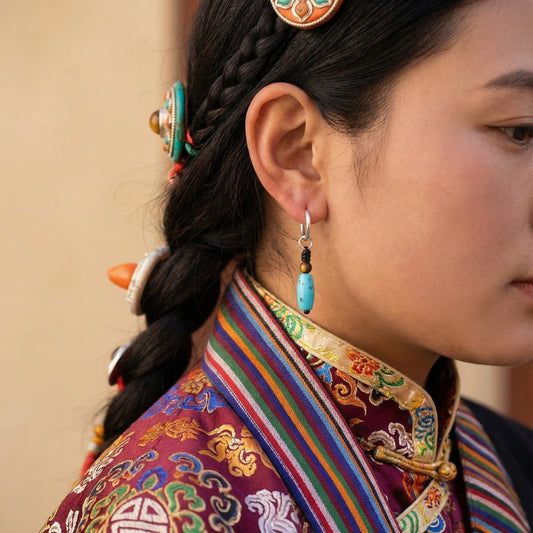
That is also why antique Tibetan turquoise and heritage-inspired turquoise designs often feel different from fast fashion accessories. They are not trying to look identical. Their strength is in texture, history, and material presence.
4. Heirloom Jewelry vs Fast Fashion Jewelry: The Real Difference
The clearest way to understand heirloom jewelry is to compare what each type of jewelry is trying to do. Fast fashion jewelry usually solves a short-term styling problem. Heirloom jewelry solves a long-term relationship problem: what piece is worth keeping close?
| Question | Fast Fashion Jewelry | Heirloom Jewelry |
|---|---|---|
| Why do you buy it? | To match a trend, outfit, or quick mood. | To mark a value, memory, milestone, or long-term style identity. |
| How long is it meant to last? | Often only a season or a few wears. | Years, decades, or long enough to be passed on. |
| What gives it value? | Novelty, price, and trend relevance. | Material quality, craftsmanship, personal meaning, and long-term wear. |
| What happens over time? | It may tarnish, break, feel dated, or lose emotional relevance. | It can gather patina, memory, and a stronger sense of ownership. |
| How does it affect your jewelry box? | It often adds more forgotten pieces. | It helps build a smaller, more intentional collection. |
This is the real antidote to fast fashion jewelry: not buying nothing, but buying with a clearer standard. Fewer pieces. Better materials. Stronger reasons. More time.
5. How to Choose an Heirloom Turquoise Piece
If you want jewelry that will not end up forgotten, begin with how it will live on the body. The right heirloom piece should match the person’s habits, style, and emotional reason for wearing it.
Choose a turquoise necklace for a personal milestone
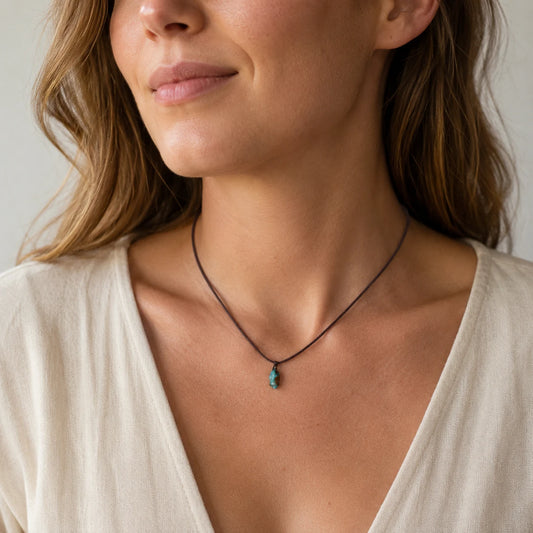
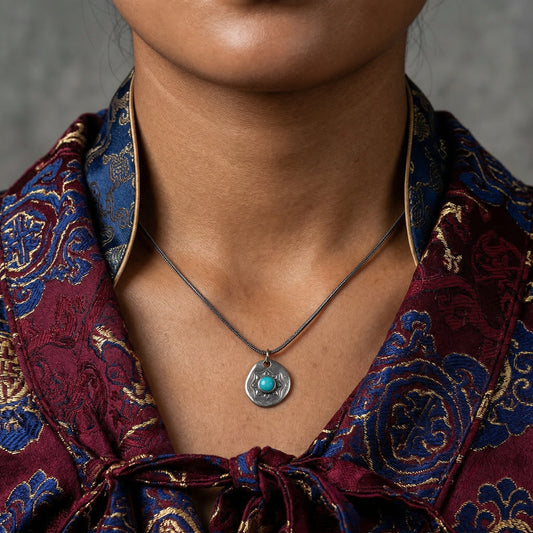
An authentic turquoise necklace works well when the meaning is close to the heart: graduation, a new chapter, a private promise, or a gift meant to be worn often. A pendant can stay visible or be tucked under clothing, which makes it one of the most flexible heirloom forms.
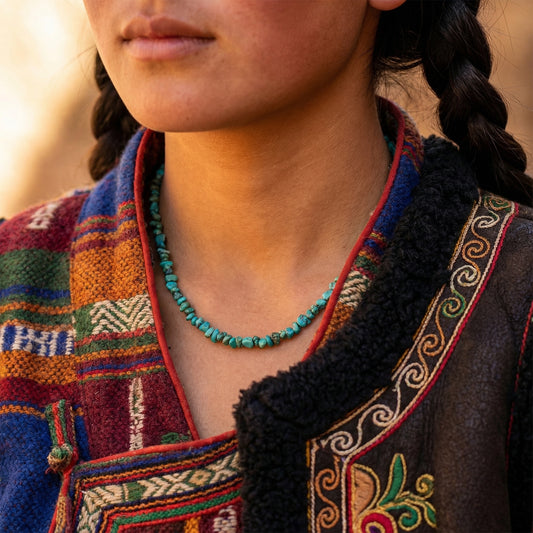
For a more personal direction, The Plateau Stream Tibetan Turquoise Necklace uses freeform turquoise shapes that feel organic rather than overly polished.
Choose a turquoise bangle or bracelet for daily presence
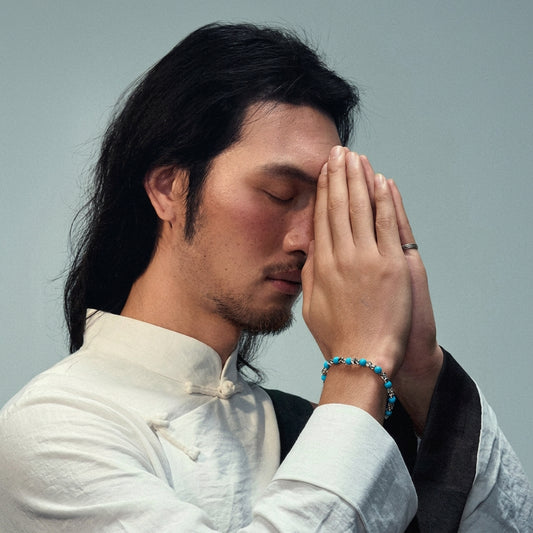
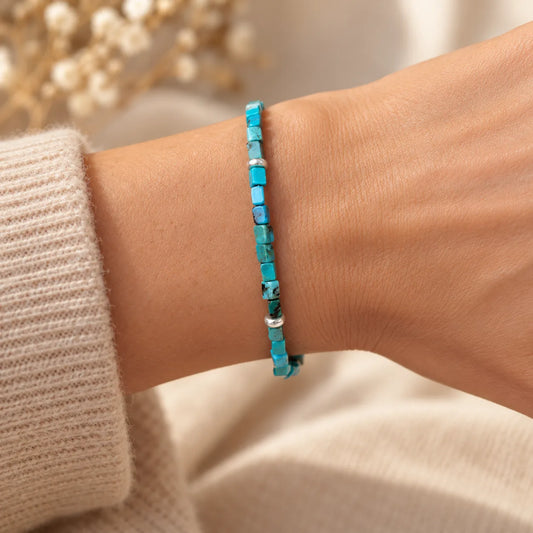
A solid turquoise bangle or silver bracelet works best for someone who likes tactile jewelry. Bracelets move with the wrist and become part of daily gestures: working, driving, writing, packing, cooking, or reaching for someone’s hand.
The Grounding Bracelet is a good example of a piece that feels substantial without needing to be overly decorative.
Choose a turquoise ring for self-recognition
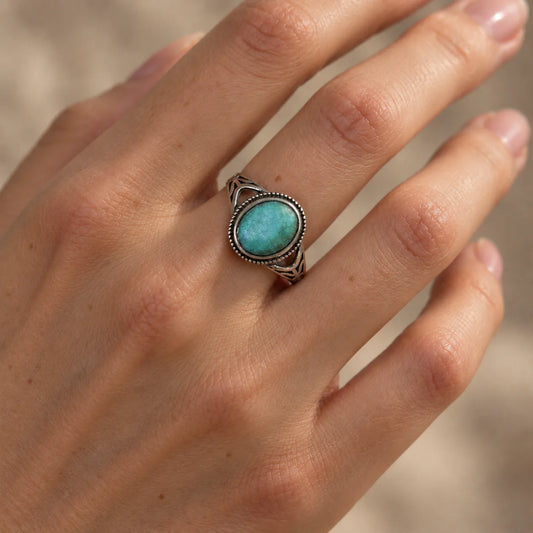
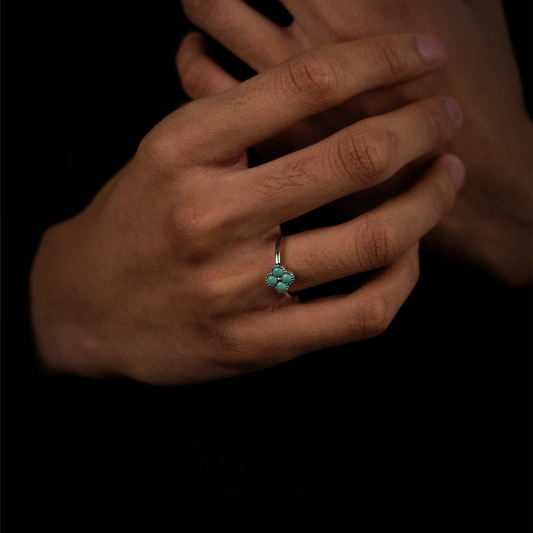
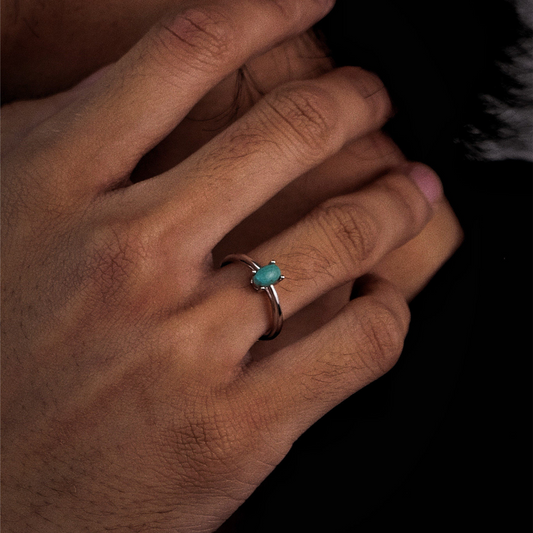
A turquoise ring is often the most visible form of heirloom jewelry. It stays in view while the wearer works, speaks, writes, or moves through the day. That visibility makes a ring especially strong as a self-reward or personal milestone piece.
Explore the Wisdom Collection when the goal is a ring with presence, structure, and a quieter symbolic feel.

6. How to Avoid Buying Another Piece You Will Forget
Before buying another piece of jewelry, ask a few slower questions. These questions help separate a short-term trend purchase from a piece that has a chance to become part of your life.
- Would I still wear this if it were not trending?
- Does the material feel real enough to age well?
- Can I imagine wearing it with clothes I already own?
- Does it mark a memory, value, transition, or person?
- Is it comfortable enough to wear repeatedly?
- Would I repair it, care for it, or keep it if it showed signs of age?
If the answer is no to most of these questions, the piece may be another fast fashion impulse. If the answer is yes, it may be the beginning of a smaller, more meaningful jewelry collection.

7. FAQ: Heirloom Jewelry, Fast Fashion Jewelry, and Real Turquoise
Q: Why choose heirloom jewelry over fast fashion jewelry?
A: Choose heirloom jewelry when you want fewer, better pieces that can hold material quality, personal meaning, and long-term wear. Fast fashion jewelry can be fun for trends, but it often becomes disposable because it is not chosen with the same standard.
Q: What makes a piece of jewelry an heirloom?
A: A piece becomes heirloom-worthy when it combines durable materials, careful craftsmanship, personal meaning, and the ability to age with character. It does not have to be old. It has to be worth keeping.
Q: Is turquoise good for heirloom jewelry?
A: Yes, turquoise can be a strong heirloom material because each stone has its own color, matrix, and natural variation. When paired with solid silver and thoughtful craftsmanship, turquoise jewelry can feel personal and distinctive over time.
Q: How can I tell real turquoise from fake?
A:
• Check the matrix: natural veining should look integrated into the stone, not painted on top.
• Feel the temperature: real stone often feels cooler than plastic or resin at first touch.
• Look for variation: natural turquoise usually has subtle shifts in color or depth. If it looks perfectly uniform, compare it carefully with common imitations such as dyed howlite.
Q: How do I care for natural turquoise jewelry?
A: Keep turquoise away from harsh chemicals, acids, perfumes, and ultrasonic cleaners. Store it separately in a soft pouch to reduce scratching. Wipe it gently with a soft cloth, and let normal careful wear develop its character over time. You can also read our care guide for more details.
Conclusion: Build a Jewelry Box Without a Graveyard
The answer to fast fashion jewelry is not guilt. It is a better standard.
You do not need endless pieces to feel expressive. You need pieces with enough material truth, emotional reason, and daily wearability to stay. A turquoise necklace, bangle, or ring becomes meaningful not because it is loud, but because it can return with you through different seasons of life.
TashiTurquoise creates pieces for that slower kind of ownership: natural stone character, silver craftsmanship, and forms that can become part of a personal tradition.
Start with one piece worth keeping:
- For a life transition: choose an authentic turquoise necklace.
- For daily presence: choose a solid turquoise bangle or bracelet.
- For self-recognition: choose a turquoise ring from the Wisdom Collection.
Explore Earth's Offerings: choose heirloom turquoise jewelry made to stay in your life longer than a trend.